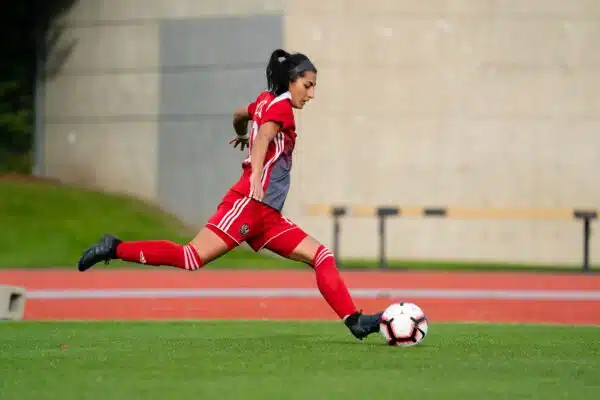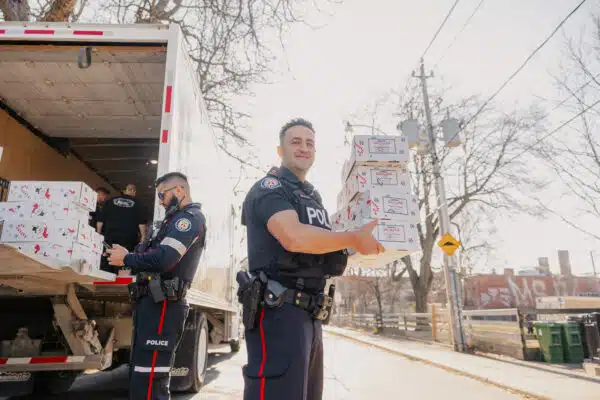



Maryam Masoomi hosting her radio show Kabul Jan at CFCR, Saskatoon’s community-run radio station. © Maryam Masoomi
When the Taliban seized Kabul in August 2021, Maryam Masoomi was a university student who suddenly found herself helping lead the escape of more than 200 people—herself included. That experience now shapes her work with newcomer youth at the Saskatoon Open Door Society, the very organization that helped her rebuild her life in Canada.
By Rafay Ahmed in Ottawa, Canada
As a high school student in Afghanistan, Maryam Masoomi was involved in just about everything she had time for, and then some. She excelled in academics, studied Korean, dabbled in photography, produced radio and TV shows, and even led an all-girls music group.
A lot of that was thanks to the school she attended: Marefat High School. Set up in the early 2000s after the fall of the Taliban, the co-ed, community-run school on the outskirts of Kabul put a strong focus on civic education and student leadership. “The teachers at Marefat encouraged girls to have dreams, to enjoy learning, and to believe in our skills.”
For Maryam, whose parents never studied beyond primary school, the school offered opportunities they had never known.
After doing well on Afghanistan’s national university entrance exams, she earned a scholarship in 2017 to study for a Bachelor of Education at Kabul University.
Still, even as she began her studies, Maryam stayed closely connected to Marefat by taking on a role as assistant director in the school’s music department. “I spent half the day at university and the other half back at Marefat, working with the students. I was so busy back then.”
Maryam also continued performing with the Sound of Afghanistan, the all-girls music group she helped lead in high school.
“We sang about education, about human rights and women’s rights. Our songs carried messages for people in Afghanistan and even beyond.”
The feedback, Maryam remembers, was moving. “We received so many good comments and so much appreciation, from our parents, from our relatives, from people we didn’t even know. I heard that girls were even singing our songs in other schools.”
The summer everything changed forever
As her graduation neared in the summer of 2021, Maryam’s mind was on the future. Perhaps a full-time job at Marefat. Maybe new ways to push for women’s rights through music.
Though the Taliban were gaining ground in Afghanistan, few believed Kabul would fall. The Afghanistan Maryam had known all her life—where girls could study, dream big, and speak out—felt unshakable.
“Then in one day,” as Maryam puts it, “everything changed forever.”
August 15, 2021, began like any other day for Maryam. She was working in Marefat’s basement TV studio until suddenly a colleague burst in with the news: the Taliban had entered Kabul. “It was a shock,” she recalls. “Everyone lost all their hopes in just a moment.”
The trip home, normally 20 minutes, was chaos. “Everyone on the streets was running and shouting and panicking.”
Back home, with the doors locked and windows shut, Maryam knew immediately she could not stay in Afghanistan and remain safe—especially not as a woman who had spoken out for her rights through music.
Maryam began reaching out to anyone she thought might help.
“I emailed all the embassies in Afghanistan… all of them. I sent emails to get visas, just to get out. Get out of our country. But there was no response.”
Then, a few days later, came a call from Marefat’s principal.
“He called me to ask me to collect all the IDs, email addresses, phone numbers, everything from all the girls in the Sound of Afghanistan, and send it back to him.” His son, based in the United States, was part of an informal network working to evacuate Marefat students, a group that would become the Thirty Birds Foundation.
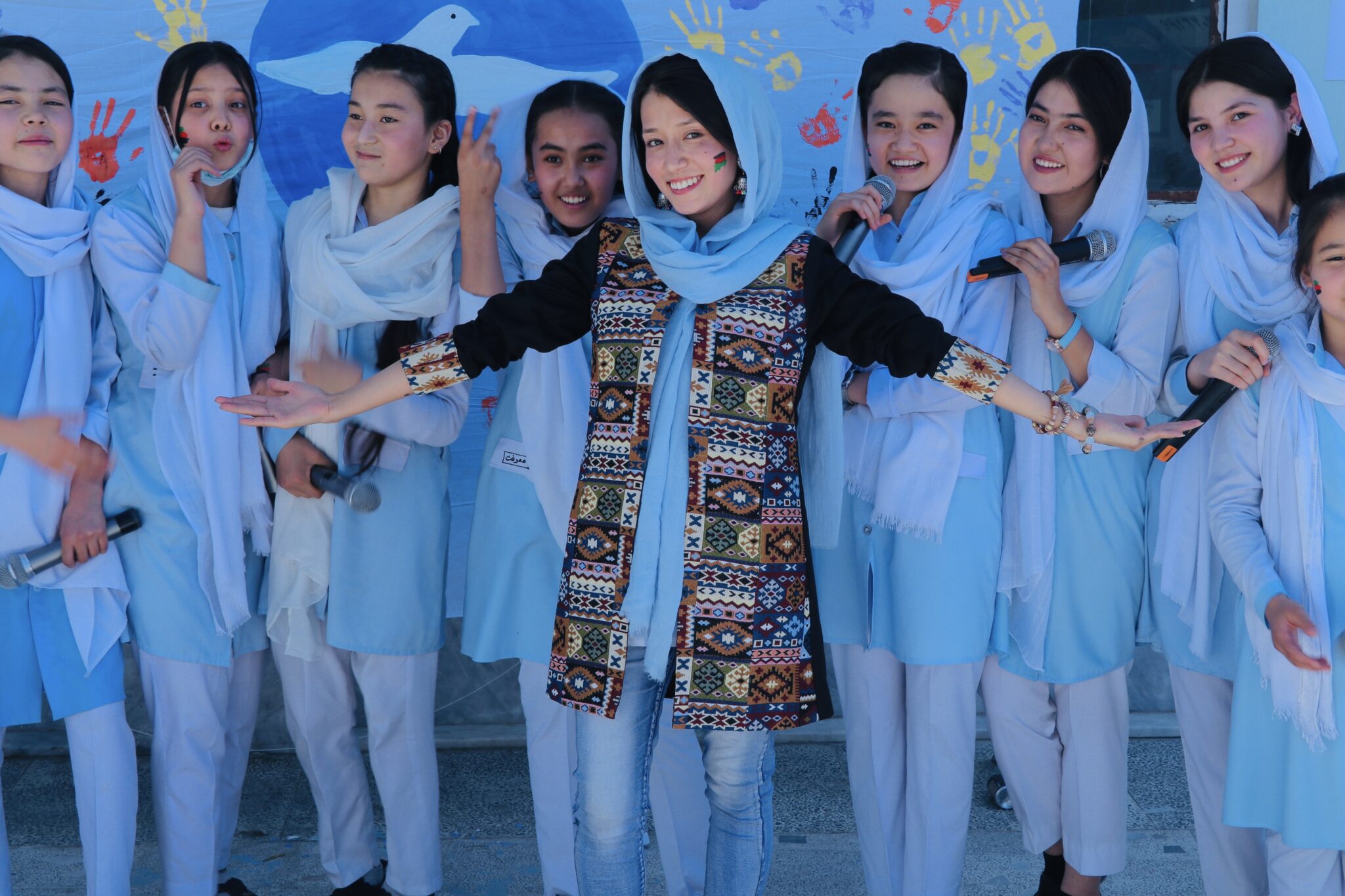
Maryam joins members of the Sound of Afghanistan at Marefat High School during International Peace Day celebrations. © Maryam Masoomi
Canadian visas were secured for the girls and their families, but the evacuation flight was set to depart from Mazar-i-Sharif—a 10-hour drive from Kabul through a gauntlet of Taliban checkpoints.
At just 24, Maryam was left to help lead the escape of more than 200 people.
“I would stay up all night sending messages to families, to people in the United States. I was awake all day and night. It was so stressful.”
Families travelled in staggered groups to avoid drawing suspicion from the Taliban. Maryam coordinated updates between them, tracking checkpoints and sharing safe routes forward.
When Maryam’s turn came, she travelled with her mother and siblings. Her visibility from the Sound of Afghanistan made her a target.
At one checkpoint, the Taliban stopped them.
“I was just crying. I thought they were going to shoot us.” In the end, after what felt like an unending wait, they allowed Maryam and her family to pass.
Once safely in Mazar-i-Sharif, they waited and waited for the flight. Then, nearly two weeks later, came the crushing news: the Taliban would not allow it. Their only option now was to make the long journey back to Kabul, then push on to Torkham, at the Pakistan border.
Maryam was stunned. “How should I give this message to all these families who came all the way here and were waiting? I received so many calls from families asking, ‘Where are we going? When is the flight? What is the situation?’”
For Maryam, the back and-forth journey was becoming increasingly exhausting—emotionally and physically. “On the way back, I got sick. When we stopped in Kabul, I had to go to the hospital and get an IV drip. It wasn’t even half finished, and I had to ask them to take it out so we could keep going to Torkham.”
After weeks of setback and hardship, they finally reached Torkham, the last stop before crossing into Pakistan and leaving Afghanistan behind.
Maryam and her family were among the first to cross the border, leaving early in the morning. They passed through several Taliban-controlled gates, telling guards her mother was sick and needed treatment. At the final gate, the Pakistani guards—aware of their case and Canadian visas—waved them through. Following weeks of hiding and danger, they were finally safe.
It was a mix of relief and grief for Maryam and the girls of the Sound of Afghanistan. “You’re free from the Taliban, but at the same time, it’s very sad because you’ve just left your country.”
Once the girls crossed into Pakistan, the Thirty Birds Foundation took over—arranging buses to Islamabad, providing food and hostel accommodation, and guiding them through a hectic month of paperwork: biometrics, medical checks, COVID tests, and every other step needed to come to Canada.
Then, one afternoon in Islamabad, Maryam got the news. “We were going to be resettled in a city called Saskatoon. I couldn’t even pronounce the name. I had to search for it on Google—and when I saw the pictures, there it was: a beautiful green city with a beautiful river running through it.”
A new chapter in a city called Saskatoon
On October 15, 2021—exactly two months after the Taliban entered Kabul—Maryam arrived in Saskatoon with many of the people she had helped evacuate. At the airport, they were greeted by staff from the Saskatoon Open Door Society (SODS), a nonprofit that has supported newcomers in the city since the 1980s.
“They were wearing these SODS T-shirts and had teddy bears, toys, and cards for us. They asked us questions, brought us food, took us to a hotel—they were just helping us a lot.”
The support didn’t end there. Across Saskatoon, SODS mobilized donations of cookware, furniture, and other essentials to help families settle in. “The people in Saskatoon were so nice to us,” Maryam remembers.

Maryam at a Saskatoon Open Door Society booth with members of the Sound of Afghanistan. © Maryam Masoomi
From her first weeks in the city, Maryam knew she wanted to work for SODS.
“I was inspired by their staff, and I thought, ‘I have to find a way to give back.”
But starting out wasn’t easy. Maryam’s first job was at Tim Hortons, where she had to quickly learn a menu far more complex than the green and black tea she was used to in Afghanistan.
“There were so many smoothies and coffees,” she recalls. “I was also really shy talking to customers.”
Once she had some time to find her footing, an employment counsellor from SODS helped Maryam build a résumé and connected her with CFCR, Saskatoon’s community radio station. She pitched an idea for a show —and soon, every Saturday morning, she was playing Afghan music on Canadian airwaves. “I felt so good sharing the music of my culture on Canadian radio.”
That opportunity opened new doors. Maryam was hired part-time by CBC as an associate producer while also securing a job as a youth facilitator at SODS. After a year of balancing both roles, she chose to leave CBC to work full-time at SODS—a decision driven by what she sees as the organization’s greatest strength: many of its staff, herself included, know firsthand what it means to start over in a new country, and can connect with and support newcomer youth in a way few others can.
As a youth facilitator, no two weeks are the same: one might involve running a storytelling workshop, teaching students how to write, film, and edit their own video series; another might take her into schools throughout Saskatoon, helping newcomer students connect better with their classmates.
For Maryam, the most rewarding part is seeing the same faces return to programs at SODS again and again. “It feels so good when you see them growing, still participating, still coming back, and having fun with all our programming. I know the kids from my first year, and they keep coming. It feels so good.”
Looking ahead, Maryam dreams of a future in public service, perhaps even running for office in Canada. She already has a platform to run on: “Women’s rights, and of course human rights,” rooted in her thoughts for the millions of women and girls still living under Taliban rule in Afghanistan—friends who are “trying so hard not to lose hope.” Their resilience, she says, is her motivation to keep going, a reminder of why she must use her own freedom to speak out.
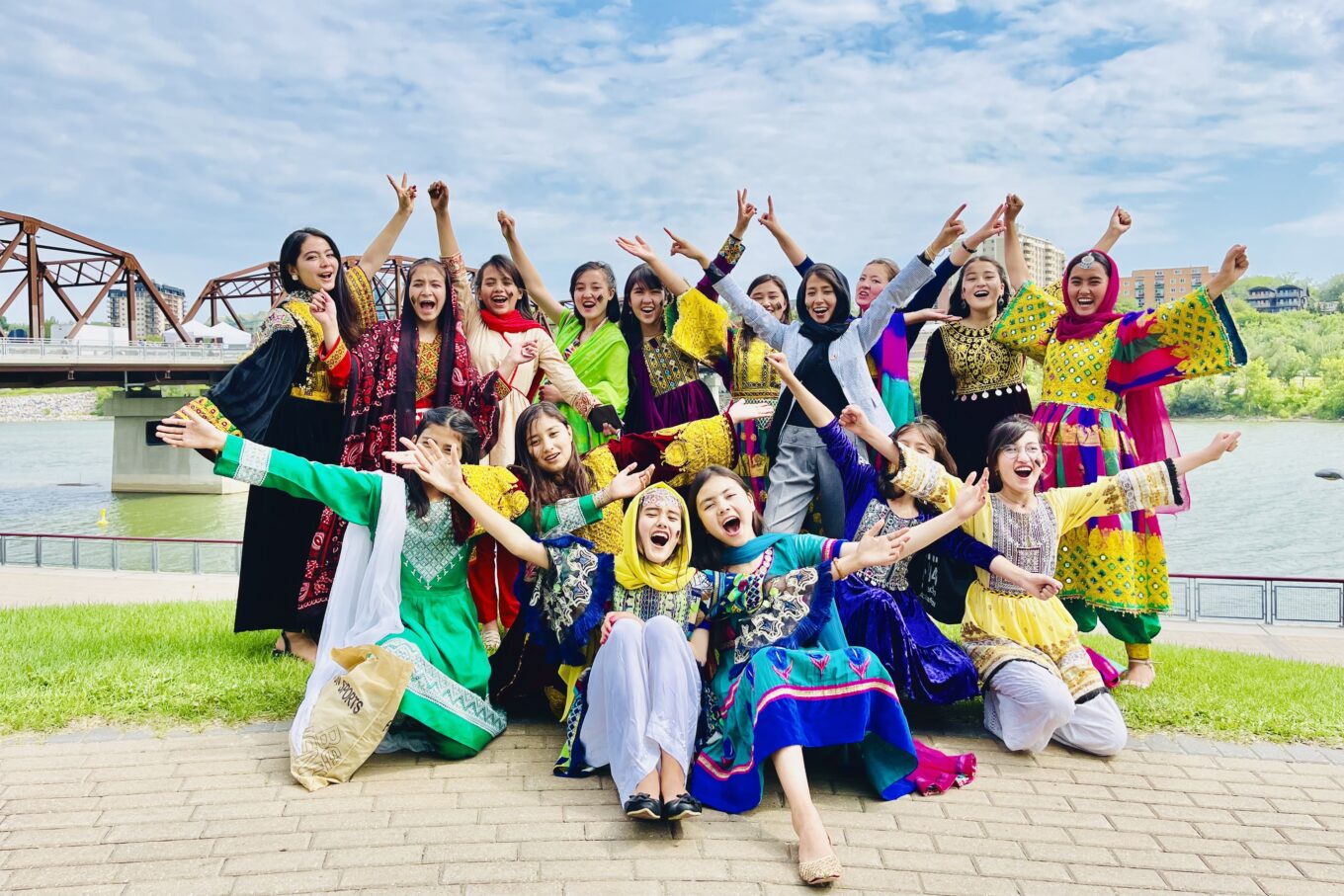
Members of the Sound of Afghanistan celebrate together at their first performance in Canada during Canada Day festivities in 2022. © Maryam Masoomi
As for the Sound of Afghanistan, the support of SODS has helped the members stay closely connected. Together, they have written and recorded new songs in Saskatoon, and, in 2022—less than a year after their escape from Afghanistan—they were able to take the stage during Canada Day festivities in the city.
Reflecting on that performance, all the emotions of the day come flooding back to Maryam.
“When the Taliban took control of Afghanistan, we thought we would never sing again in our lives. But fortunately, we got this opportunity to come to Canada.”