


More than a game
How soccer changes lives.
Photo: © UNHCR/Samuel Otieno

Photo: © UNHCR/Samuel Otieno
As Canada co-hosts the FIFA World Cup 26™, we celebrate the power of soccer not just to entertain, but to unite, inspire and create communities where refugees and newcomers feel at home.
Whether you call it soccer or football, it’s much more than a game for refugees.
It offers hope and a sense of belonging in their new communities. It bridges cultures, fosters connection, and gives young refugees a space where their strength and resilience can shine.
Across Canada, refugees are connecting with their communities and building new lives through the power of sport.
“Football is more than a game to me.
It gives me hope, gives me a sense of freedom, gives me a sense of belonging. Every time I step on the pitch, I feel free.”
— Alphonso Davies, captain of the Canada Men’s National team
A bridge to belonging
Since the 1980s, more than 1.5 million refugees have settled in Canada. With soccer now the country’s most-played sport, it offers a powerful link between cultures and a meaningful way for newcomers to feel at home.
For many refugee children and youth, soccer is more than a game. It provides structure, builds confidence, and creates a safe, inclusive space to connect with others. Through sport, young people develop friendships, strengthen their sense of belonging, and begin to rebuild their lives.
“It’s amazing to see how something as simple as soccer brings people together.”
Over the past year, UNHCR has been speaking with refugee youth, coaches and community organizers who shared how sports, and soccer, can support belonging, resilience, and inclusion for newcomers in Canada.
FIFA World Cup 26™
Across refugee settlements around the world, you’ll find kids kicking a ball, debating players, and dreaming of the big stage. In Canada, the sport offers newcomers more than exercise or excitement, it promotes well-being and a fun way to be part of their new community.
With the World Cup coming to Toronto and Vancouver in 2026, we’re eager to share how soccer can help bring us together. In this space, we will:
- Highlight the strength and resilience of refugee athletes, coaches and volunteers
- Showcase communities supporting refugee inclusion through sport
- Celebrate soccer’s global power to unite us
- Connect newcomers with the World Cup spirit
- Inspire refugee youth to dream big
- Advocate and raise vital funds for displaced people worldwide
Be part of our team supporting refugees worldwide.
A bridge to belonging
Since the 1980s, more than 1.5 million refugees have settled in Canada. With soccer now the country’s most-played sport, it offers a powerful link between cultures and a meaningful way for newcomers to feel at home.
For many refugee children and youth, soccer is more than a game. It provides structure, builds confidence, and creates a safe, inclusive space to connect with others. Through sport, young people develop friendships, strengthen their sense of belonging, and begin to rebuild their lives.
Over the past year, UNHCR has been speaking with refugee youth, coaches and community organizers who shared how sports, and soccer, can support belonging, resilience, and inclusion for newcomers in Canada.
Partner with us
We’re eager to work with a variety of partners in Canada to help us highlight the power of soccer to support refugees and bring communities together.
If you know someone who deserves to be featured or are interested in partnering with us, please let us know by contacting Zeba Tasci.
Featured stories
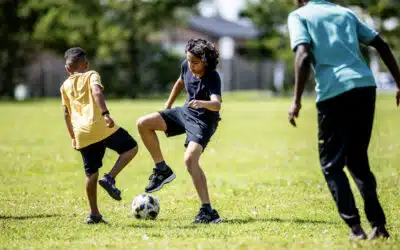
A new beginning through play: how Welcome to Play brings hope, healing and belonging to kids in Edmonton
In Edmonton, Free Play for Kids’ Welcome to Play program creates a space where the simple act of play becomes something much more profound — a bridge to healing, connection and belonging.
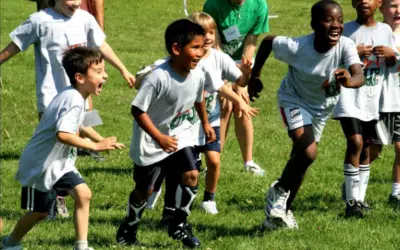
Calgary’s Soccer Without Boundaries: ‘We invest in them, they come back as mentors’
Fifteen years ago, Jean Claude recognized that in his public housing community, integrating vulnerable youth—often newcomers and refugees—into the community was not enough, nor was the simple goal of keeping them out of trouble. What was missing was an opportunity for these youth to feel a sense of belonging and a pathway to contribute.
Fortunately, Jean Claude knew firsthand the power of soccer to bring people together and create belonging.
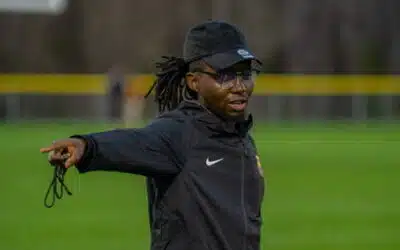
“Soccer gave me community”: How Héritier Masimengo found integration and belonging through soccer
Héritier was born in 1998 in Goma, in the eastern Democratic Republic of the Congo, during a time of violent conflict. His earliest years unfolded in uncertainty, as war disrupted daily life and forced families to make impossible choices. When Héritier was six years old, his family fled in search of safety and began a new life in Canada.

From Syria to the Simbas: How Saleh Al Osman found belonging through soccer—and now helps others do the same
Under the fading evening sun in Terraview Park, you’ll often find Saleh Al Osman pacing the sidelines, cheering on kids with a whistle around his neck and a quiet confidence in his voice. For Saleh, the soccer field isn’t just a place to play—it’s where communities...
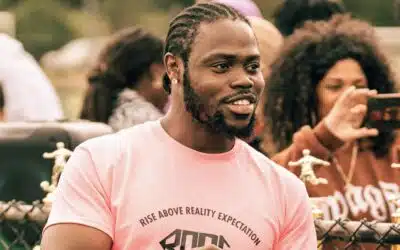
‘Soccer is everything’: How Dacious Richardson’s love of the game helped him heal from a childhood shaped by war
From a childhood shaped by war in Liberia to building one of Vancouver’s most dynamic youth initiatives, soccer has remained a constant through every chapter of Dacious Richardson’s life. For him, it’s only the beginning of unlocking the game’s potential.
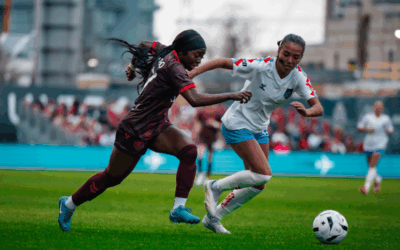
Leveling the field: How Nyota Katembo turned refugee roots into a rising soccer career
When Nyota Katembo steps onto the field, everything else fades away; the noise, the pressure, the weight of her past.
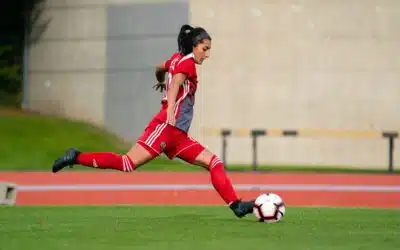
‘We made it!’ How soccer helped Farkhunda Muhtaj find her purpose
For Farkhunda Muhtaj, soccer is much more than a game. Captain of the Afghanistan Women’s National Team, now playing for Calgary Wild FC in the Northern Super League, she represents both Canada and Afghanistan with pride, purpose, and unwavering resolve.
Gamechanging Team: From uprooted to unstoppable
As part of UNHCR’s global More Than a Game campaign, the UNHCR Gamechanging Team brings together players whose lives have been shaped by displacement, resilience and hope.
Captained by UNHCR Goodwill Ambassador and Canadian soccer star Alphonso Davies, the Gamechanging Team is a powerful reminder of the resilience, talent and determination of people forced to flee their homes. Made up of refugee athletes and players with refugee backgrounds, the team highlights how sport can create connection, opportunity and hope in the face of displacement.
Davies is joined on the team by Germany’s Antonio Rüdiger – whose parents fled conflict in Sierra Leone to Germany – and nine other players, each of whom has experienced the impact of displacement, including: Asmir Begović, Ali Al-Hamadi, Eduardo Camavinga, Victor Moses, Mohamed Touré, Awer Mabil, Nestory Irankunda, Bernard Kamungo and Ermedin Demirović. Many of these players will feature on the pitches at the World Cup in Canada, Mexico and the United States.
Inspired by Davies’ own journey from a refugee camp in Ghana to the world stage, the initiative encourages fans and communities to see refugees not for the challenges they have faced, but for the extraordinary potential they carry. Through football, the Gamechanging Team is helping to inspire a new generation to believe that, with support and opportunity, anything is possible.
The team is also being portrayed in an artwork by Canadian sports artist and human rights activist Carling Jackson. The piece depicts the team in a pre-game line-up with their younger selves standing in front of them, visually capturing the journeys that have shaped each player.
“Painting the Gamechanging Team was deeply personal for me. Each player’s story reflects how displacement can shape a life and how soccer can change it,” Jackson said. “Through this artwork, I wanted to honour their journeys and reflect soccer’s power to transform lives, inspire resilience and remind young refugees everywhere that they are not alone.”
Through the summer, the artwork will be on display at the United Nations building in New York. It is also featured at Union Station in Toronto.
What does More Than a Game mean to you?
We’re eager to hear from partners across Canada. Are you highlighting the power of soccer to support refugees? How is your community coming together? Do you have an inspiring story to share?
Please let us know by contacting Zeba Tasci.