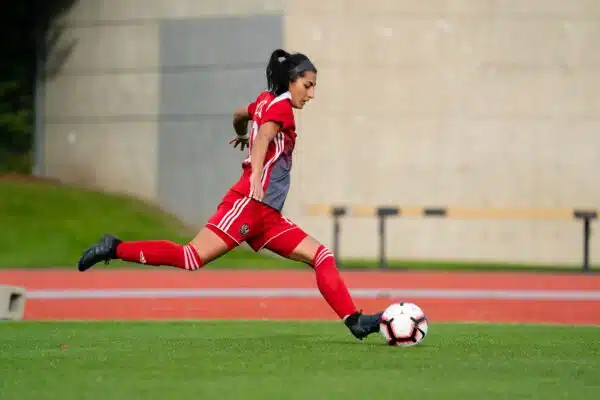


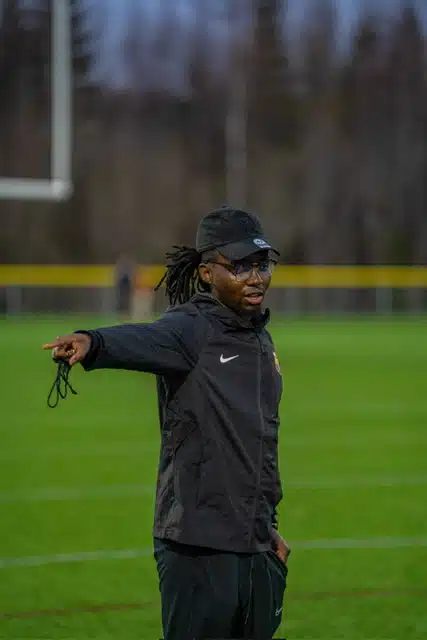
Héritier Masimengo arrived to Canada as a young refugee. Soccer helped him find community and belonging. Through coaching, community involvement, and leadership, Héritier continues to build bridges between cultures and communities.
Gratitude is the first thing people notice about Héritier Masimengo.
Before speaking about his achievements, his work, or his goals, he pauses to say thank you—for the opportunity to share his story, and for the people who helped shape it.
“I’m thankful,” he says simply. “For the journey, and for the chance to talk about it.”
Héritier was born in 1998 in Goma, in the eastern Democratic Republic of the Congo, during a time of violent conflict. His earliest years unfolded in uncertainty, as war disrupted daily life and forced families to make impossible choices. When Héritier was six years old, his family fled in search of safety and began a new life in Canada.
That move marked a turning point, but it was not an easy one.
Arriving in Canada as a young refugee meant learning a new language, navigating a new school system, and adjusting to a culture that felt unfamiliar. Growing up, Héritier was often one of the only refugees, and one of the only Black children, in his community. He stood out in classrooms and neighbourhoods, aware of his difference and carrying experiences that few around him could fully understand.
What helped him find his place was soccer.
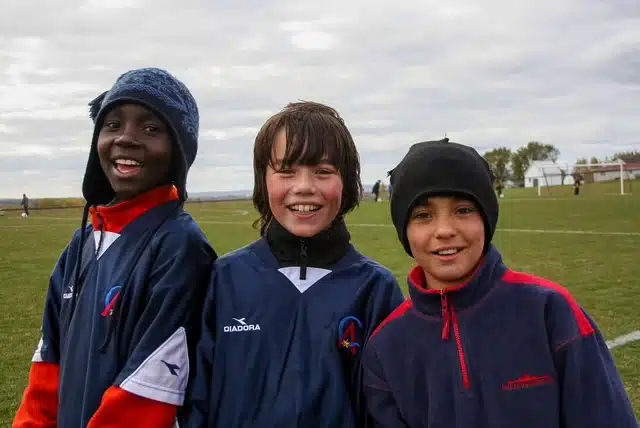
New to Canada, Héritier, left, with young teammates at an outdoor soccer practice in Dieppe.
From the moment he stepped onto a field, the game offered Héritier something rare: immediate belonging. Soccer did not require perfect words or explanations. It asked only effort, commitment, and teamwork. With a ball at his feet, Héritier felt confident and capable in a way he had not felt elsewhere.
“Soccer helped me integrate,” he says. “It gave me community. It gave me confidence.”
Practices became routine, games became milestones, and teammates became friends. Soccer provided structure during uncertain years and helped Héritier build resilience. It taught him discipline and perseverance, lessons that would later shape his academic life and leadership off the field.
As he grew older, soccer continued to open doors. Héritier pushed himself to compete at higher levels, balancing the demands of school with his dedication to the sport. His hard work eventually led him to play at a collegiate level, while attending University. Despite opportunities to study and play elsewhere in Canada and the U.S., Héritier chose to attend the Université de Moncton. “This has always been home,” he says. “Staying close to family and community was important to me.”
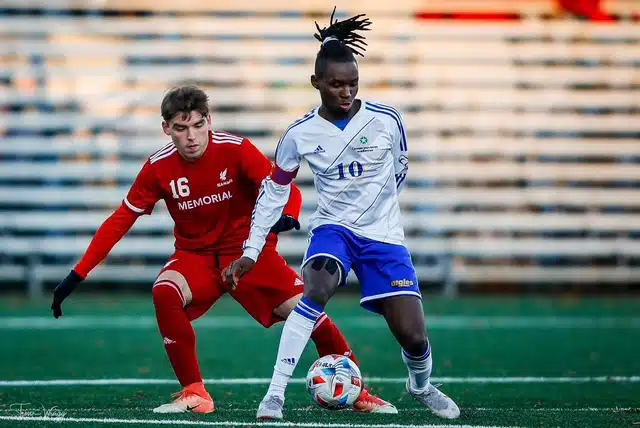
Héritier plays with the Université de Moncton.
University life brought new challenges: intense training schedules, academic expectations, and the pressure to perform. But Héritier approached them with focus and perspective. “I know how lucky I am,” he says. “I don’t take these opportunities for granted.”
He graduated from University in 2020, with a major in Criminology and a minor in Sociology.
In New Brunswick, Héritier found more than just a place to study and play. As a Francophone refugee, he connected deeply with Acadian communities, whose history of displacement, persecution, and resilience resonated with his own experiences.
“I feel like Acadians understand persecution,” Héritier explains. “Their history helps them understand my story.”
That shared understanding fostered a sense of belonging that went beyond language. Through friendships, teammates, and community connections, Héritier felt welcomed not just as an athlete, but as a person. The empathy he encountered reinforced his belief that communities shaped by hardship often develop a strong capacity for inclusion.
Today, Héritier’s relationship with soccer has evolved. While he remains deeply connected to the game as a player, he is equally committed to using sport as a tool for community-building and social change.
Héritier is actively involved with Soccer Dieppe, in New Brunswick, where he serves as an Executive Board Member, contributing to player development and supporting initiatives that aim to make the sport more accessible. He works with young athletes from diverse backgrounds, including refugees and newcomers, helping them navigate pathways that once felt out of reach to him. “It feels great to be able to contribute to the governance and strategic decision making. I feel proud to be able to champion inclusion and newcomer integration initiatives, and of course, coach within the club.”
For Héritier, this work is deeply personal.
“When I was younger, I didn’t see many people who looked like me,” he says. “Now, I want to make sure soccer is open and accessible to everyone.”
He believes that sport can play a powerful role in helping refugee and newcomer youth rebuild confidence, develop leadership skills, and feel a sense of belonging in their new communities. Something as simple as access to a team or a supportive coach, he says, can change the course of a young person’s life.
Beyond the field, Héritier is committed to sharing his story. By speaking openly about his journey as a former refugee, he challenges misconceptions and highlights the contributions refugees make to Canadian society. He emphasizes that refugees are not defined by displacement, but by resilience, talent, and determination.
“People often see refugees as only needing help,” he says. “But we also bring strength, ideas, and leadership. We want to give back.”
For Héritier, giving back is both a responsibility and a source of pride. He’s been involved in the soccer community in New Brunswick since he was just 14 years old. Starting off as a volunteer, he has spent over a decade continuously engaged, from volunteering and coaching, to leadership and community building. He is grateful for the protection and opportunities he found in Canada, and he feels a strong sense of duty to help create those same opportunities for others, especially for young people who may feel isolated or unseen.
Soccer remains at the heart of that mission. The game that once helped a young refugee boy feel less alone has become a platform for mentorship, advocacy, and connection. Through coaching, community involvement, and leadership, Héritier continues to build bridges between cultures and communities.
Looking ahead, Héritier sees his future as deeply intertwined with service. Whether through sport, education, or advocacy, he is focused on creating spaces where people feel welcomed and valued. His energy is contagious, his optimism steady, and his belief in the power of community unwavering.
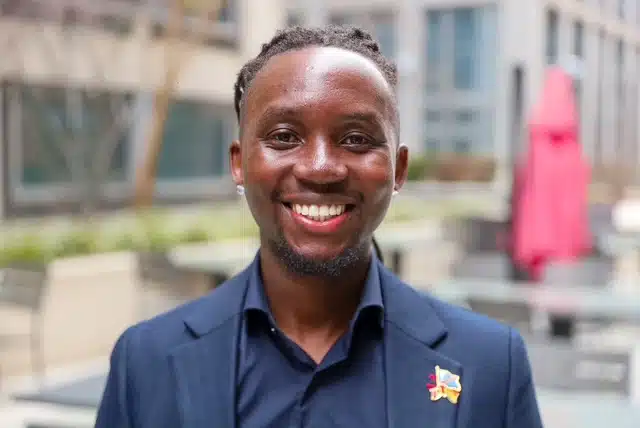
Today, Héritier is the East Region Director with Soccer New Brunswick. He was recently appointed to Canada Soccer’s Incident Review Body (IRB), where he contributes to independent disciplinary decision-making within the national professional game, supporting the integrity, accountability, and governance framework of the sport in Canada.
Héritier Masimengo’s story is a reminder that with protection, opportunity, and belonging, refugees can thrive,and help shape stronger, more inclusive societies.
For Héritier, soccer has been a constant companion through change and uncertainty. It has carried him from conflict to campus, from isolation to leadership, and from survival to service.
Because in his life, soccer has always been more than a game.