


On April 29, 2026, UNHCR Canada was invited to appear before the House of Commons’ Standing Committee on Citizenship and Immigration (CIMM) as part of its study of Canada’s immigration system. UNHCR Canada Representative Tracey Maulfair and Senior Legal Officer Azadeh Tamjeedi presented on behalf of UNHCR.
Video recording of the CIMM appearance (April 29, 2026)
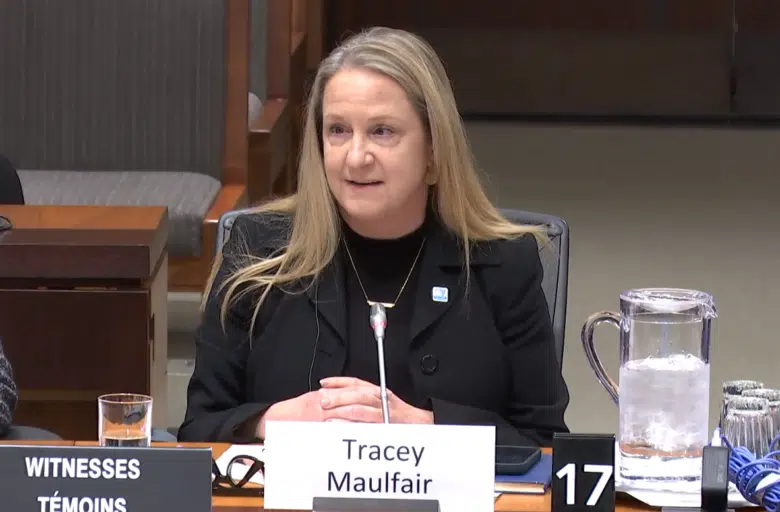
On April 29, 2026, UNHCR Canada was invited to appear before the House of Commons’ Standing Committee on Citizenship and Immigration (CIMM) as part of its study of Canada’s immigration system. UNHCR Canada Representative Tracey Maulfair presents on behalf of UNHCR.
Thank you for the opportunity to appear before the Standing Committee on Citizenship and Immigration for its study of Canada’s immigration system. Today, I would like to focus my comments on asylum and asylum systems.
It is noteworthy that I am speaking in a year when we mark the 75th anniversary of the 1951 Refugee Convention. In the wake of WWII, the Convention was a landmark commitment by States to ensure that people fleeing persecution would never again be left without protection. Marking this anniversary is not simply an occasion for reflection. It is also an occasion for States to reaffirm their promise to uphold its principles at a time of increasing forced displacement due to war, conflict and persecution.
At its heart, the Refugee Convention affirms a simple but powerful idea: that those forced to flee have the right to seek asylum, and that protecting them is a shared responsibility. In today’s world – defined by conflict and fragmentation – this commitment is being tested. As of mid 2025, 117.3 million people were forcibly displaced worldwide, 8.4 million of which were asylum-seekers. Behind every statistic is an individual who left home in order to survive, carrying with them hope for safety and dignity.
Asylum has never been merely an act of generosity; it is an expression of courage. The courage of those who flee, and the courage of societies that choose to welcome them, even when it demands effort, resources, and political will.
It is a fact that the global asylum and displacement system is under strain. Responsibility for hosting refugees continues to fall disproportionately on countries closest to conflict, 71% of the world’s refugees are hosted in low to middle income countries. This imbalance erodes protection, fuels irregular and dangerous journeys, and leaves far too many people in prolonged uncertainty.
Canada has a vital role to play through its asylum system and maintaining an example to the world of how to properly assess asylum applications. This means ensuring fair and efficient asylum procedures and access to due process. Timely decision‑making is essential, not only for public confidence, but for the people whose lives remain on hold while they wait. Fairness and efficiency are not competing goals; they are mutually reinforcing pillars of a credible system. Let’s not forget that Canada receives less than two percent of the world’s asylum applications and that number continues to decline. Now is an opportune time to look at ways to increase efficiency, innovate, and to use tools already at its disposal, such as the Immigration and Refugee Board (IRB) whose expertise is well recognized internationally. The best way to address system backlogs and integrity concerns is by processing cases in a timely manner, not by deterrence measures.
In discussing these complex realities, often of a technical nature, we have a shared responsibility to work together to ensure that the conversation about asylum and refugees remains objective and balanced, based on sound legal analysis and facts rather than populist rhetoric. Asylum systems must be flexible to address changes in the patterns and profiles of asylum-seekers to remain fair, cost-effective and efficient. This ensures public confidence in the integrity of the system while safeguarding against returning people to persecution.
Internationally, Canada’s responsibility extends beyond emergency humanitarian response. Durable solutions require supporting host countries, and resettlement remains a powerful expression of international solidarity. Canada’s leadership in this area sends an important signal at a time when safe pathways are narrowing globally forcing more to make perilous journeys along irregular routes. But resettlement cannot replace asylum. Both are essential, complementary components of a robust international protection system, fully aligned with the spirit and the letter of the Refugee Convention.
As we mark its 75th anniversary, we are reminded that the Convention is not a relic of the past. It is a living commitment; one that calls on us to respond to displacement with courage rather than fear, with cooperation rather than fragmentation, and with humanity rather than indifference.
Canada has both the credibility and the capacity to lead in this critical moment. UNHCR stands ready to continue to work with the Government to advance a principled and collaborative response to displacement.
Thank you.