

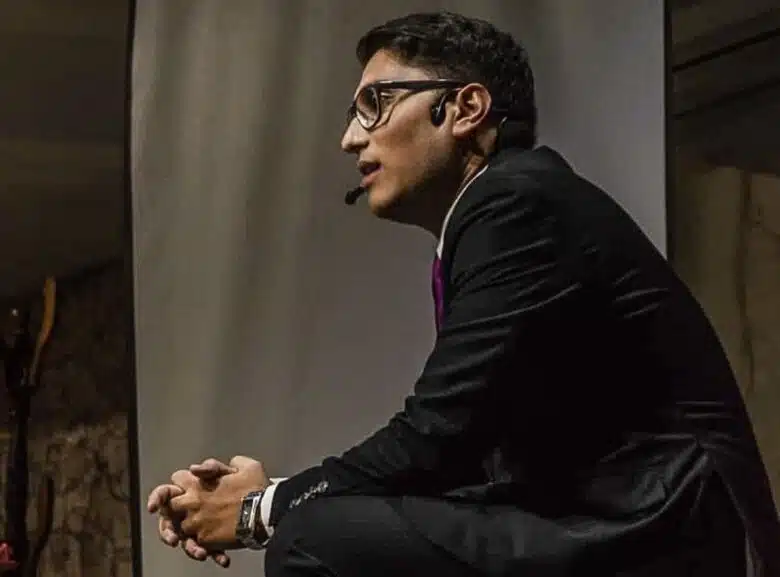
Halim Naim fled Venezuela for his journalism and found safety in Canada’s Human Rights Defenders program, now rebuilding his life while continuing to fight for truth. © Halim Naim
Forced to flee Venezuela for his work, journalist Halim Naim found safety through Canada’s Human Rights Defenders program. Now, he is showing that this protection can be the foundation and platform to rebuild a life and continue the fight for the truth.
By Zeba Tasci in Ottawa, Canada
For more than 15 years, Venezuelan journalist Halim Naim built his career on one principle: telling the truth.
“I am addicted to the truth,” he says. However, that commitment came at a cost.
Reporting in a country where freedom of expression was steadily eroding, Halim faced threats, censorship, and detention. As his visibility grew, so did the risks.
“To place yourself in the sight of people who hold power is to simply sign your letter of persecution,” he explains.
Despite the danger, he continued his work—leading political coverage, interviewing senior public and political figures, reporting national events, and defending the public’s right to be informed. But the pressure intensified. After speaking about contested elections and giving a platform to opposition voices, threats extended beyond him to his family.
“I separated from my family to protect them,” he recalls.
Soon after, Halim fled Venezuela. He sought refuge in Colombia, where he continued advocating for human rights and supporting fellow Venezuelan refugees. But life remained uncertain. Without secure legal status and amid ongoing safety concerns, he struggled to rebuild. “I felt like I was working in hiding.”
Human rights defenders – A pathway to safety
In 2025, after years living in exile, he was identified by UNHCR, the UN Refugee Agency, as a journalist at risk and was referred to Canada’s Human Rights Defenders resettlement program.
The program is designed to protect individuals who face threats because of their work defending human rights—journalists, activists, and community leaders whose voices are often targeted. For many, it offers a rare and urgent lifeline: a safe pathway out of danger and a chance to continue their human rights work in freedom.
“Canada’s commitment to providing a safe haven for human rights defenders is a global model of humanitarian leadership,” says Tracey Maulfair, UNHCR Representative in Canada. “By recognizing the specific risks faced by journalists and community leaders, this program ensures that their expertise and courage are not lost to persecution. Our partnership here is about ensuring that those who stand up for others have a place to stand themselves.”
For Halim, the process moved quickly. Within months, he and his family arrived in Canada.
“Canada saved me,” he says simply.
Beyond safety, the program also provided recognition. “I never felt like a number. I felt like a professional who could contribute.”
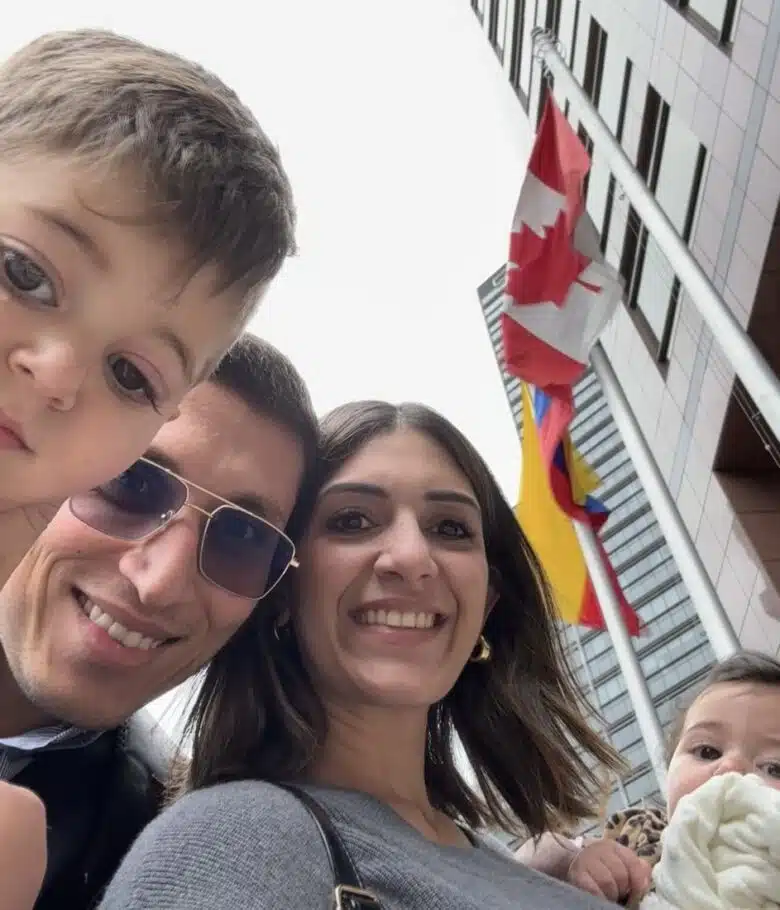
Halim Naim with his family. © Halim Naim
By offering a pathway to safety and a supportive resettlement process, the program allows human rights defenders not only to escape persecution, but to rebuild their lives with dignity and purpose. It also enables them to continue contributing their expertise, whether through journalism or advocacy, in their new communities.
Canada’s Human Rights Defenders program offers safety to people defending human rights and face serious risk because of their work. These individuals may be journalists, lawyers, activists, environmental defenders, people working in women’s rights, LGBTQI+ activists, and community leaders. In 2025, UNHCR identified over 100 cases to be recommended for the program.
“This is not just a program. These are not just numbers, these are saved lives,” explains Halim.
He believes that such initiatives benefit both those who are protected and the countries that receive them.
He encourages other countries to adopt similar programs, emphasizing that protecting human rights activists is not only a humanitarian responsibility, but also an investment in stronger, more inclusive societies.
The role of a free press
Halim sees journalism as inseparable from human rights. In Venezuela, where independent media has been restricted, journalists often resort to indirect language to avoid repercussions.
“Saying things between the lines allows only one percent of your audience to understand you. But we need one hundred percent to understand what is happening.”
For him, access to accurate information is fundamental. Without it, other rights are harder to defend. “The best way to defend human rights is to tell the truth.”
Now in Canada, Halim is preparing to resume his work. He is improving his English, rebuilding his journalistic and human rights work in Canada continuing to speak out through digital platforms.
“The voice from exile shouts louder.”
– Halim Naim
Looking ahead
Halim hopes to use his experience to contribute both to Canada, and one day, Venezuela. His goal remains the same: telling the truth to defend human rights.
Canada, he says, has given him the stability to begin again. “I am a professional rebuilding my life.”
For Halim, the program that brought him to safety represents something larger than his own story: a commitment to protecting those who speak out against injustice, and ensuring voices are not lost.
“Exile did not silence us. Exile ignited voices, made them stronger, made them more solid, more secure.”