

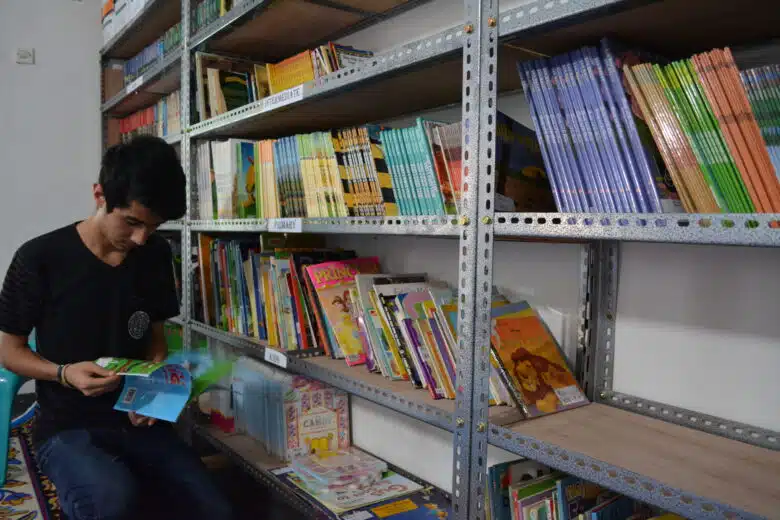
Abdullah Sarwari flips through a children’s book. At just 18 years old he became the principle of a school for refugee youth in Indonesia. Photo Credit: Abdullah Sarwari.
By Zeba Tasci in Ottawa, Canada
When Abdullah Sarwari was 16 years old, he believed his education had come to an end.
His family had fled to Indonesia after years of displacement, joining thousands of refugees waiting for safety and a chance to rebuild their lives. But there was one devastating reality they hadn’t anticipated: refugee children in Indonesia could not attend public schools, and adults had no right to work.
“It was shocking,” Abdullah recalls. “We had just escaped to safety, but suddenly we realized there was no school and no future that we could see.”
Instead of accepting that reality, a group of refugee parents, young people and volunteers gathered every afternoon in a local park in Jakarta to ask a simple question: What can we do?
Those conversations would grow into a refugee-led learning centre that has transformed hundreds of young lives—and launch Abdullah on a journey from student volunteer to school principal, refugee advocate and community leader in Canada.
Learning without a classroom
Education had never been guaranteed in Abdullah’s life.
Born to Hazara parents from Afghanistan and raised primarily in Iran, his schooling was repeatedly interrupted by policies that barred refugee children from classrooms.
“Some years we were allowed to attend public schools,” he says. “Other years, just before school started, they would announce that refugee children were no longer allowed.”
When that happened, volunteers improvised. Classes moved into basements and borrowed spaces where refugee children continued learning in secret.
Despite never having the opportunity to finish school himself, Abdullah’s father insisted that education was non-negotiable.
“He absolutely loved education,” Abdullah says. “He forced us to go to school whenever we could.”
His father also enrolled Abdullah and his younger sister, Muhaddisa, in private English classes every summer—an investment that felt frustrating at the time.
“I hated it,” Abdullah laughs. “I was the only child in classes full of adults. Other kids would make fun of me for learning English.”
Years later, that decision would open doors neither of them could have imagined.
A school built by refugees
When Abdullah’s family arrived in Indonesia in 2015, refugee children once again found themselves excluded from formal education. Determined to change that, Abdullah, other families, and older siblings began meeting every afternoon in a local park, where weeks of conversations about what refugees could do eventually sparked the idea to build a school for refugee children.
Families pooled their savings to rent a tiny building with only three classrooms. Six classes shared the space, with students facing opposite directions in the same room while teachers competed to be heard above the noise.
It wasn’t ideal—but it was a beginning.
Word spread through social media, where volunteers documented science activities, lessons and school events using little more than a mobile phone.
Soon, an education organization in Malaysia offered training for teachers and school leaders and helped cover the school’s first year of rent. A crowdfunding campaign later allowed the community to move into a larger building.
Abdullah joined the school’s management team with no official title and little experience.
“I just wanted to help,” he says.
His first responsibility was ringing a makeshift school bell between classes.
“I remember how productive I felt,” he says, smiling. “For 16-year-old me, having that one responsibility meant everything.”
As the school grew, so did Abdullah’s role. He managed social media, welcomed visitors, coordinated partnerships and eventually, after senior volunteers were resettled to other countries, was elected principal at just 18 years old.
Watching younger refugee children learn became one of his greatest sources of joy.
“I genuinely believed we would never have school again,” he says. “Seeing my siblings sitting in a classroom doing the most basic science experiments—it felt miraculous.”
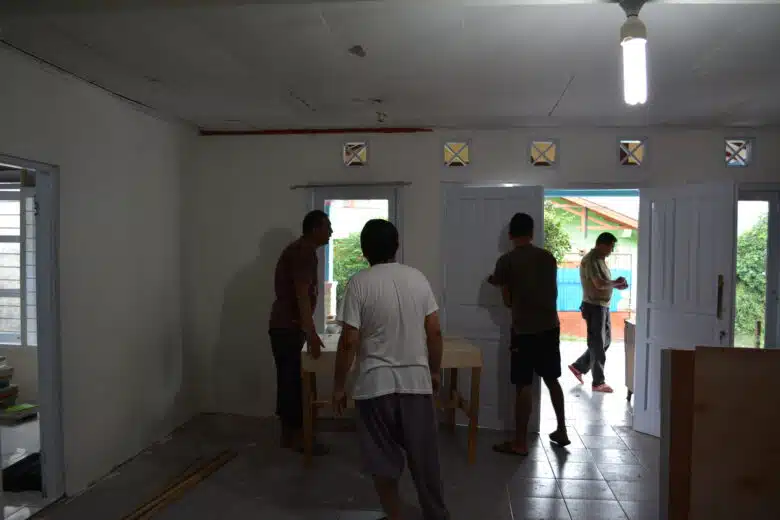
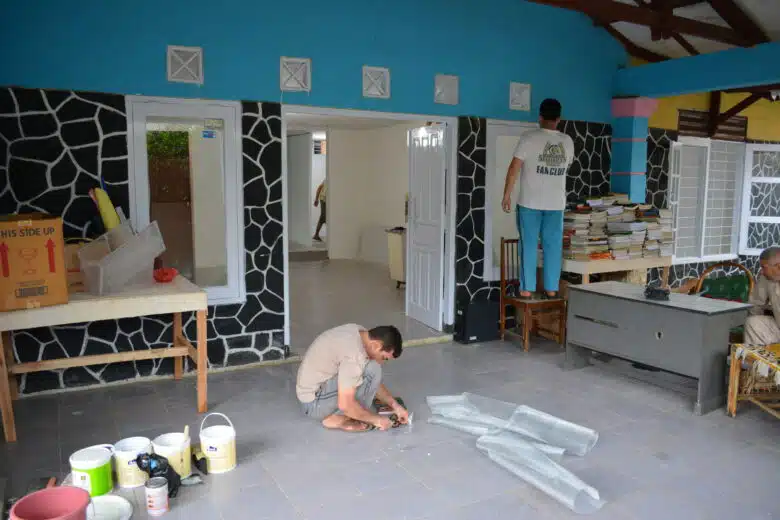 Volunteers help build the school for refugee youth. Photo Credit: Abdullah Sarwari.
A future that seemed impossible
Eventually, Abdullah accepted a position with UNHCR in Indonesia as a refugee interpreter—the first refugee hired into the role there.
Only months later, his family received life-changing news: they had been accepted for resettlement in Canada.
The moment was bittersweet.
By then, refugees in Indonesia had been warned they could face waits of 10 to 15 years before resettlement.
“I remember imagining myself and my siblings 10 years older, still unable to work or study,” Abdullah says. “For many families, that news destroyed hope.”
Leaving the school he had helped build was equally difficult.
“I loved what I was doing,” he says. “I wasn’t getting paid, but I had purpose.”
Starting over
Arriving in Canada brought safety—but also unexpected challenges.
For the first time in his life, Abdullah had choices.
Until then, survival had meant taking whatever opportunities were available. Suddenly, there were thousands of possible paths: college or university? Trades or technology? What career? What future?
“I’d never had to think about those things before,” he says. “It was overwhelming.”
Months after arriving in late 2019, the COVID-19 pandemic shut down settlement services just as Abdullah and his family were trying to navigate life in a new country.
He spent nearly a year struggling with depression.
“My mom would ask me to go outside, even just for a walk,” he remembers. “I just couldn’t.”
Gradually, through part-time work, new friendships and returning to school, he began rebuilding.
Today, Abdullah is completing a diploma in Computer Studies and Information Systems before transferring to university.
“I realized nobody really knows if they’ve chosen the perfect path,” he says. “You just have to choose what feels right and keep moving.”
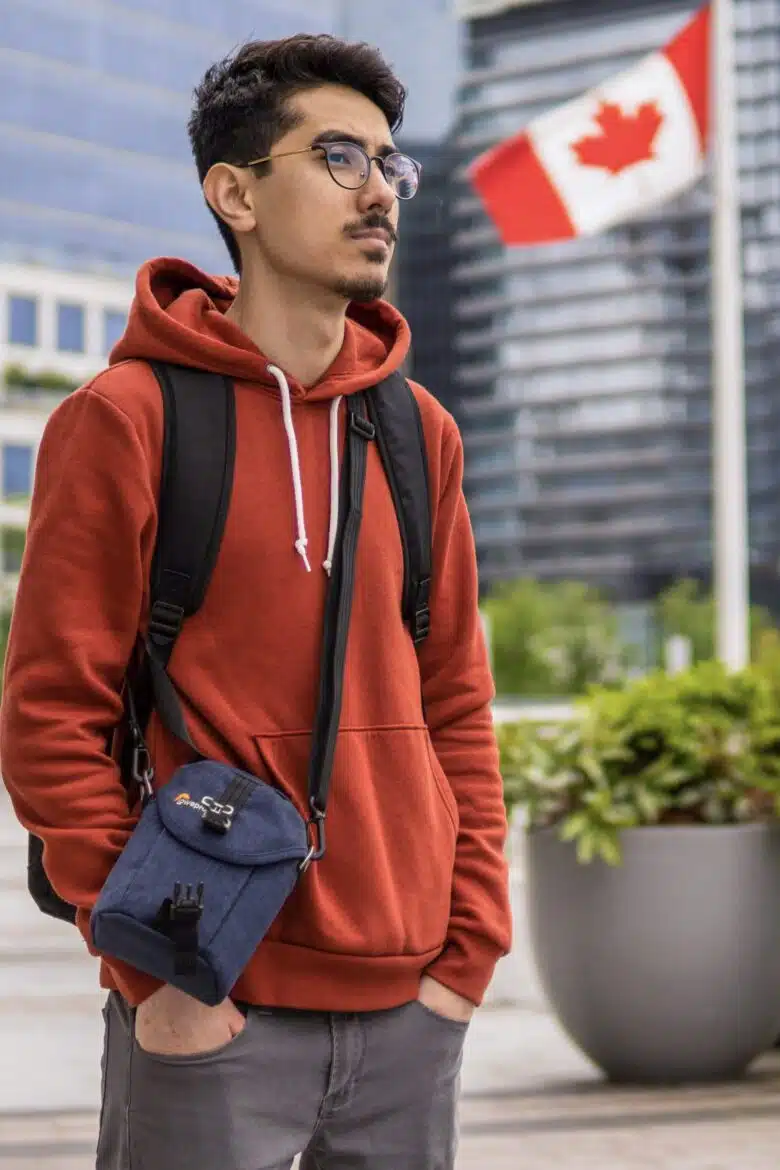
After years of displacement, Abdullah’s family arrived to Canada in 2019. Photo Credit: Abdullah Sarwari.
Telling a different refugee story
When Abdullah first began speaking publicly in Canada, he noticed audiences often wanted to hear only the most painful parts of his life.
“They wanted the tragedy,” he says. “Not the story about building a school.”
Over time, he stepped back from advocacy to focus on settling into his own life.
When he eventually returned, he did so with a different goal.
“The word ‘refugee’ is an abstract concept for many people,” he says. “People only know what they’ve seen in the news.”
Instead of asking for sympathy, Abdullah and his sister share stories of possibility—stories that challenge stereotypes and remind audiences what refugees can accomplish when given opportunities.
“We’re not unique because we’re more capable,” he says. “We’re fortunate because we were given a chance.”
Paying hope forward
In 2025, Abdullah and his sister Muhaddisa returned to Indonesia for the first time since coming to Canada. This time they came as donors, having raised another $10,000 for the refugee learning centre they helped build.
Walking back through its gates six years later was almost impossible to believe.
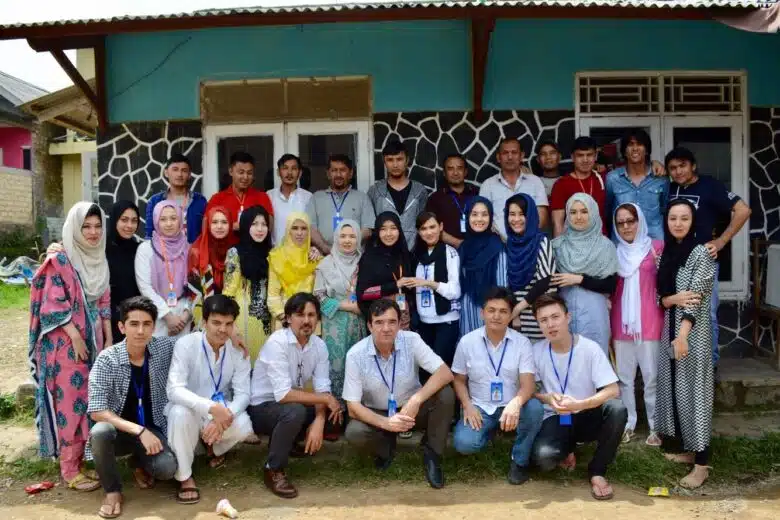
Abdullah, left front row, with teachers and volunteers at the Refugee Learning Centre. In 2025, Abdullah and his sister were able to return to the school they helped build. Photo Credit: Abdullah Sarwari.
“We looked at each other and asked, ‘Is this even real?'”
The children playing in the courtyard reminded them of their younger selves—refugees uncertain about what tomorrow might bring.
But this time, they returned with something they could offer beyond financial support.
Hope.
A mentor later told Abdullah that their visit had meant more than they realized.
“It wasn’t just a happy moment for us,” he says. “It showed the children what’s possible.”
That is the message Abdullah now carries wherever he speaks.
Education changed the course of his own life long before he ever stepped inside a Canadian classroom. It gave him purpose when the future felt uncertain, helped build a school where none existed, and continues to open doors for others still waiting for the same opportunity.
“I know things feel impossible sometimes,” he says. “But don’t lose hope. Keep learning. Prepare yourself. When the opportunity comes, you’ll be ready.”
For Abdullah, that opportunity began with a conversation in a park.
Today, its impact continues to ripple across continents.