


Middle East Situation
Millions across the Middle East face urgent humanitarian needs
Communities in Iran and Lebanon across the Middle East continue to face the devastating effects of conflict and insecurity. Even before the recent escalation, more than 24 million people across the affected countries were already forcibly displaced and returnees facing significant protection risks and humanitarian needs, alongside host communities.
Photo: ©UNHCR/Magnum Photos/Emin Ozmen
Conflict across the Middle East has forced millions of people to flee their homes. Please help us reach refugees and displaced families with life-saving assistance.

Essential items
including blankets, sleeping mats, kitchen sets, and hygiene supplies

Emergency shelter
for families forced to flee

Protection
including hotlines and in-person support
What is happening in the Middle East?
The significant military escalation across the Middle East that began on 28 February 2026 has claimed civilian lives, damaged and destroyed vital infrastructure, and forced millions of people to flee their homes.
The conflict has triggered large-scale displacement across the region. More than one million people have been displaced in Lebanon since March 2026, while government data indicates that between 600,000 and one million households have temporarily left their homes across Iran. Since 2 March 2026, and until 31 May 2026, the Syrian General Authority for Border and Customs (GABC) estimates that 444,389 Syrians crossed from Lebanon into Syria.
Even before the latest escalation, the affected countries were already hosting more than 24 million refugees, internally displaced people, and returnees facing significant protection risks and humanitarian needs, alongside the communities hosting them.
As violence spreads and displacement increases, families urgently need protection, shelter, cash assistance, health services, and other life-saving support. Humanitarian organizations are responding across the region, but growing needs continue to place additional pressure on already stretched resources.
How can I help people affected by the Middle East emergency? ?
The simplest way to support is through our secure online donation form. You can choose to give monthly or make a one-time gift, either personally or on behalf of your organization.
Your contribution helps UNHCR provide life-saving assistance and protection to refugees, displaced families, returnees, and host communities affected by conflict and displacement across the Middle East. Our donors make this work possible.
All donations to UNHCR are tax-deductible.
Where can I access the latest data and reports?
Middle East Emergency Data Portal—for the latest emergency flash updates, situation reports, CORE documents, operational updates, and data on refugees and other displaced populations across the region.
Middle East Emergency Appeal—for the latest information on UNHCR’s humanitarian response and preparedness activities across affected countries.
What is UNHCR doing?
Across the region, UNHCR is:
In Sudan, UNHCR is helping refugees and displaced families by providing:
- Works with governments, UN agencies, and humanitarian partners to provide life-saving humanitarian assistance
- Providing protection services through hotlines and in-person support
- Delivering emergency relief items where needed
- Scaling up cash assistance to help people meet basic needs as prices rise
- Supporting refugees, Afghans in need of international protection, and host communities
Across the region, UNHCR also:
- Assists people fleeing Sudan at border areas
- Maintains critical services for existing refugee populations
- Supports response capacity mapping and contingency planning with partners
- Assesses emerging needs and strengthens preparedness to ensure protection services and emergency assistance can be rapidly scaled up if required
Despite these efforts, humanitarian needs continue to grow, requiring sustained international support to ensure vulnerable families receive the protection and assistance they need.
Did you know that the Middle East was already home to more than 24 million refugees and displaced people before this escalation began?
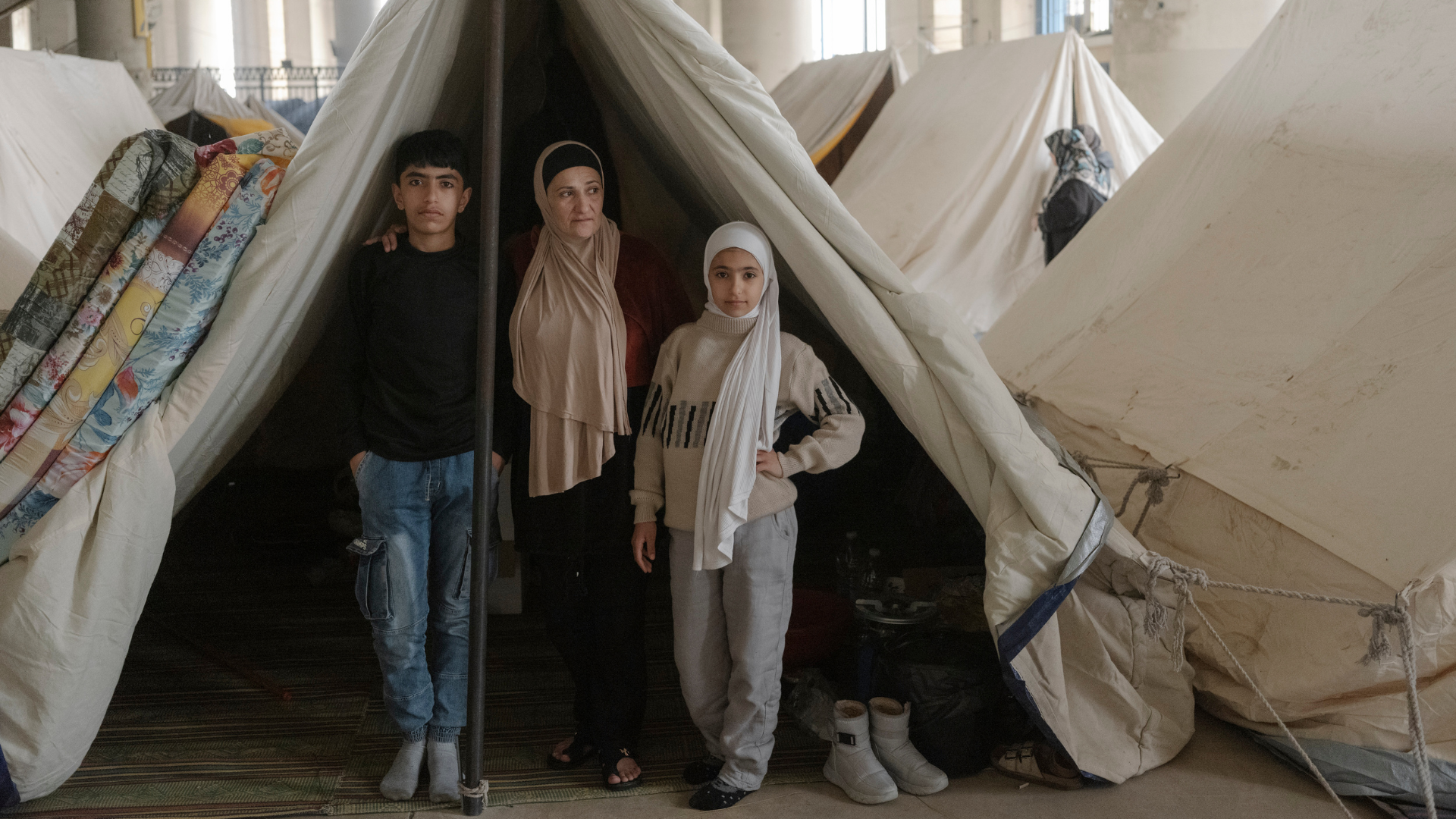
“Now have a tent, but it’s very cold here in the night. We have three blankets, we pile them on and hug each other so we can sleep.”
Lebanese displaced family – Sana (51), her daughter Eman (12) and her son Abdullah (14) – had to take shelter in a stadium in Beirut. They fled from Dahiyeh, a southern suburb of capital Beirut in the early hours of 2 March after Israeli attacks began. They had to flee a further two times before finding relative safety.
Photo: © UNHCR/Magnum Photos/Emin Ozmen
Donate Today
Please help families across the Middle East.