

UNHCR-Ipsos joint press release
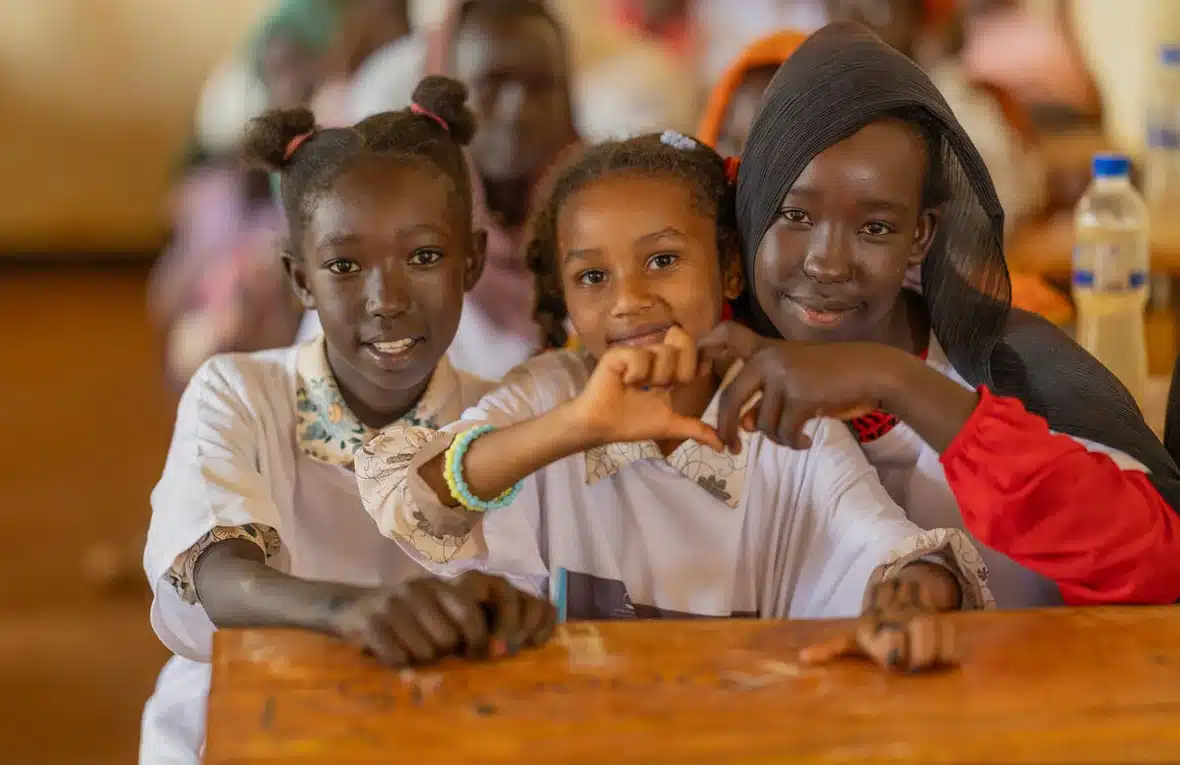
Sudanese refugee pupils at a school in Ura refugee site, Ethiopia. © UNHCR/Charity Nzomo
New Ipsos survey with UNHCR finds support for refugees resilient despite growing global uncertainties. Many question how refugee protection works in practice. Views diverge across countries and generations.
GENEVA – Public support for refugees remains remarkably resilient despite years of political turbulence, socio-economic pressures in host countries and polarizing migration debates and policies, according to a new global survey from Ipsos released with UNHCR, the UN Refugee Agency.
The recent poll found that 66 per cent of respondents across 29 countries agreed that people fleeing war or persecution should be able to seek refuge in another country – down just one percentage point from 2025 and broadly consistent with pre-pandemic levels.
Rather than indicating opposition to refugee protection, the findings showed many support offering safety for those forced to flee but retain concerns about asylum systems, border management and integration.
There is no single global perspective on refugees, but rather a spectrum shaped by local realities, media coverage, political debate and national experience. Support for refugees was strongest in Sweden and the Netherlands (78 per cent agreed that people should be able to seek refuge), followed by Spain (76 per cent). Australia, Brazil and the United States had the most positive views on refugees’ contributions. Some countries shifted over time: support in Japan rose to 64 per cent from 23 per cent in 2019, while in France it has climbed to 68 per cent from 43 per cent in the same period.
“People continue to support protecting those forced to flee. That hasn’t changed much,” said Trinh Tu, Managing Director, Ipsos UK. “But many question how refugee protection works in practice and whether systems are fair. Those views are often presented as opposites, but our research suggests they frequently coexist. Debate is shifting from whether refugees should be protected to questions of systems, delivery and responsibility. Understanding these concerns will be important for maintaining public confidence.”
Some 61 per cent expressed the view that many people seeking refugee protection may be motivated by economic opportunities or access to welfare services, rather than having a well-founded claim. Almost half (49 per cent) believed borders should be closed to refugees, while 44 per cent believed refugees would integrate successfully into society.
Support for refugee protection and doubts about the validity of some asylum claims frequently coexist, rather than appearing as opposing views.
“At a time when conflict, violence and persecution continue to uproot millions and even as asylum has become politicized and manipulated, it’s encouraging that support for refugee protection remains solid,” said Dominique Hyde, UNHCR’s Director of External Relations. “The public still broadly supports the principles of the Refugee Convention laid out three-quarters of a century ago. They want protection that is fair and efficient, with responsibility shared. UNHCR is working to support governments to ensure asylum systems are fair and effective.”
Younger people continued to express more positive views than older generations. Almost half of Gen Z (born 1997-2012) respondents (49 per cent) believed refugees would successfully integrate, compared with 39 per cent of Baby Boomers (1946-1964). Gen Z respondents were less likely to support border closures or express doubts about refugees’ motivations. Even so, concerns about integration, border management and the authenticity of asylum claims remained to some degree across age groups.
As humanitarian funding shrinks, the survey found the public increasingly expects responsibility for refugees to be shared more broadly among governments, international institutions, NGOs and other actors. Compared with 2025, more people looked to NGOs (up to 28 per cent from 23 per cent) and their own government (20 per cent from 16 per cent) to play a greater role, while fewer placed primary responsibility on wealthier countries (down to 21 per cent from 30 per cent).
When asked about specific displacement situations and how they would prefer to respond, people tended to prioritise direct emergency assistance, alongside diplomatic action and temporary protection.
The findings suggest that many people see refugee protection through a broader range of responses than resettlement alone. At the same time, resettlement remains a vital protection pathway for the most vulnerable refugees.
Notes to editors
Ipsos surveyed 21,521 adults across 29 countries between 24 April and 8 May 2026.
Results reflect averages across countries surveyed and are not population-weighted global estimates.
The question on sources of doubt was asked only to those who believe many refugee claimants are not genuine.
The question on perceptions of why others have doubts was asked only to those who believe refugee claimants are genuine.
For additional information, please contact:
- UNHCR: Matthew Saltmarsh: saltmars@unhcr.org, +41 79 967 9936
- Ipsos: Owen Evans: Owen.evans@ipsos.com, +44 7814211915