

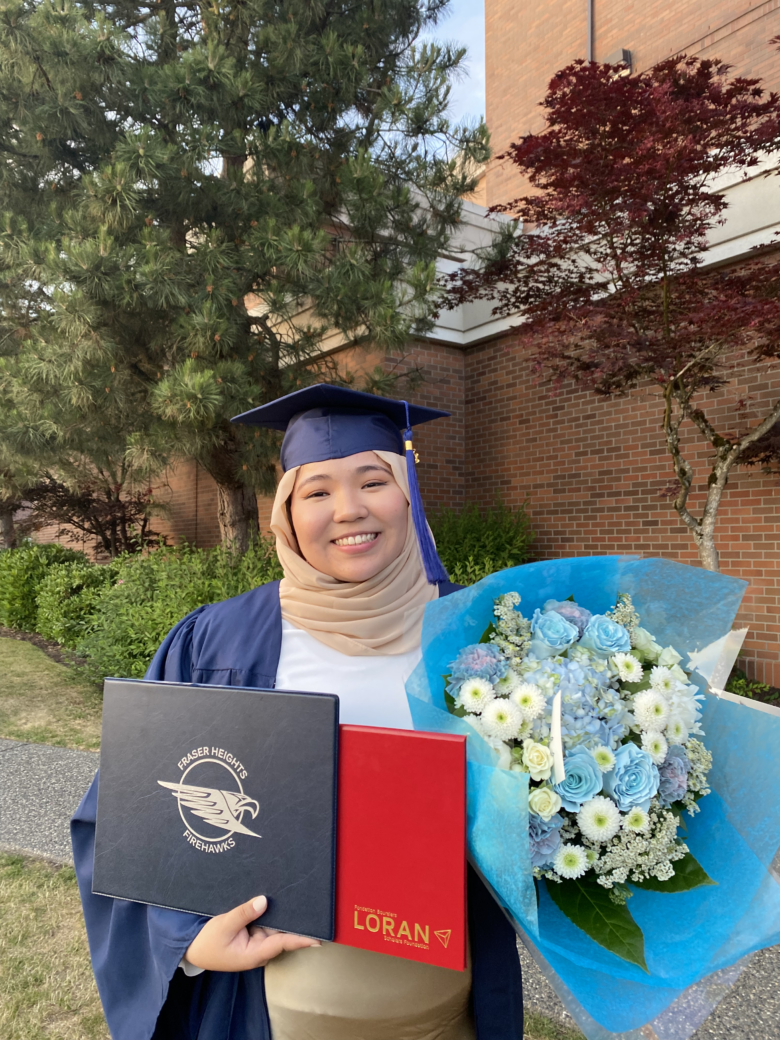
Muhaddisa Sarwari on her graduation day, displaying her high school diploma and Loran scholarship.
“Every single person in this world could have ended up a refugee. We are people just like you— and our stories matter.”
By Zeba Tasci in Ottawa, Canada
When Muhaddisa Sarwari was awarded the Loran Scholarship—one of Canada’s most competitive and respected undergraduate awards—it marked more than academic achievement. For Muhaddisa, it represented something deeper: recognition of a journey shaped by displacement, resilience, and an unwavering belief in the power of education.
More than a decade ago, if you were to tell Muhaddisa she would one day earn a Canadian scholarship valued at $100,000 there’s no doubt she would have laughed in disbelief.
Born into Afghanistan’s Hazara community, one of the country’s most historically –persecuted ethnic groups, Muhaddisa’s early life was shaped by instability and movement. Long before she could imagine a future, her family was already searching for safety.
The Hazara people have faced generations of violence, exclusion, and discrimination in Afghanistan. For many Hazara families, survival has meant leaving behind homes, histories, and loved ones in search of safety across borders. Muhaddisa’s family was no exception.
Her childhood was marked by repeated displacement, moving through Pakistan and Iran before finally arriving in Indonesia in 2015 as asylum seekers. Each move carried new uncertainty, but also the hope that the next place might offer stability and protection.
Instead, Indonesia became a place of prolonged waiting.
As refugees, Muhaddisa and her family lived in legal limbo. They were not permitted to work. They had no pathway to citizenship. Most devastatingly for a young girl with a hunger for learning, refugees were barred from accessing formal education.
“I watched other children leave for school every morning,” Muhaddisa recalls. “I didn’t understand why I couldn’t go too. I only knew that I deserved the chance to learn.”
— Muhaddisa
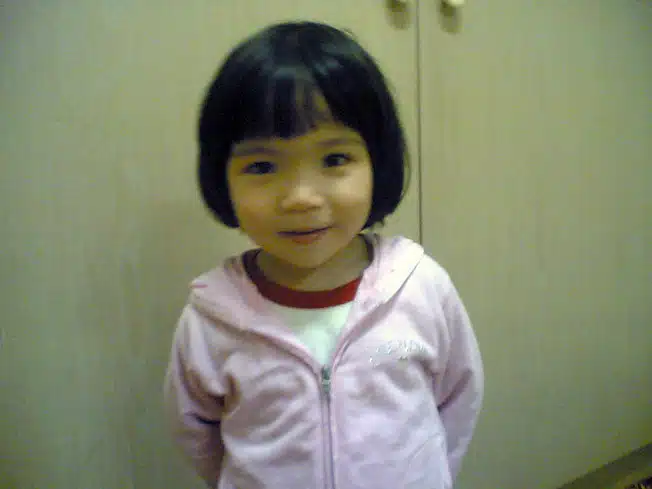
A young Muhaddisa.
From the age of ten, she lived in a world where classrooms existed just beyond reach. While local children carried backpacks and homework, refugee children remained invisible to the system meant to nurture young minds.
Determined to get an education
Being excluded from school was not just an administrative barrier — it was a denial of dignity. For Muhaddisa, it planted an unshakable understanding that education is not simply a privilege, but a right.
“When you take something away from someone, they want it even more,” she reflects.
That longing for knowledge did not fade into despair. Instead, it transformed into action.
Within the refugee community, her older brother Abdullah recognized the same injustice and decided that waiting was no longer an option. Together with other volunteers, he helped establish a small, informal school for refugee children in Indonesia. What began as a response to exclusion soon became a lifeline for dozens of displaced children.
Building a school, hope
The makeshift school was modest. It operated out of rented rooms and depended entirely on volunteers, donated supplies, and community determination. But to the children who walked through its doors, it was everything.
It was where Muhaddisa learned to read, write, and think critically. It was where children from different countries, languages, and backgrounds came together in a shared pursuit of learning. And it was where she first saw what collective action could achieve, even in the absence of formal rights or recognition.
“That school wasn’t just about lessons,” she says. “It was about dignity. It was about proving that we mattered.”
For Muhaddisa, the classroom became a space of belonging in a world that had repeatedly told her she did not belong. It also planted the seeds of leadership and advocacy that would shape her future.
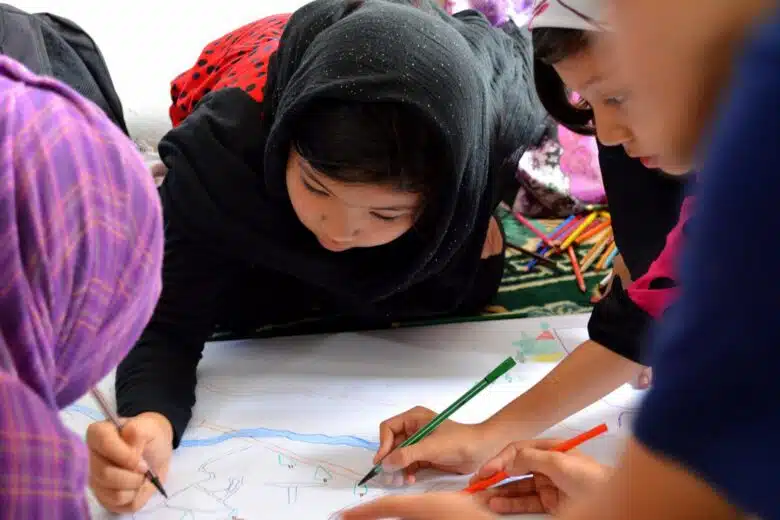
Muhaddisa draws with other children at her school in Indonesia.
Journey to Canada
After five years of waiting in Indonesia, the Sarwari family received news that would change their lives: they had been approved for resettlement to Canada.
In 2019, they arrived in British Columbia, stepping into a new country with unfamiliar systems, languages, and landscapes. For Muhaddisa, Canada represented safety — but also the daunting challenge of rebuilding yet again.
This time, however, something was different. For the first time in her life, education was no longer forbidden. It was guaranteed.
She enrolled in high school and quickly distinguished herself, not only through academic excellence but through leadership and community involvement. Teachers and peers saw in her a student driven by purpose, shaped by experience, and committed to making a difference beyond herself.
“Education in Canada felt like freedom,” she says. “It was something I had fought for my entire life.”
Muhaddisa’s dedication did not go unnoticed. Out of 4800 applicants across Canada, she was one of 36 winner of the Loran Scholarship, one of Canada’s most prestigious undergraduate awards, recognizing leadership, service, and character alongside academic achievement.
For Muhaddisa, the scholarship represented more than financial support. It was recognition of her journey, her values, and her commitment to uplifting others.
“This opportunity allows me to chase my dreams while continuing to give back to my community,” she says.
Raising her voice on global platforms
Now a political science student at the University of British Columbia, Muhaddisa focuses on human rights, refugee policy, and social justice. Her lived experience grounds theory in reality, and policy in peoples lives.
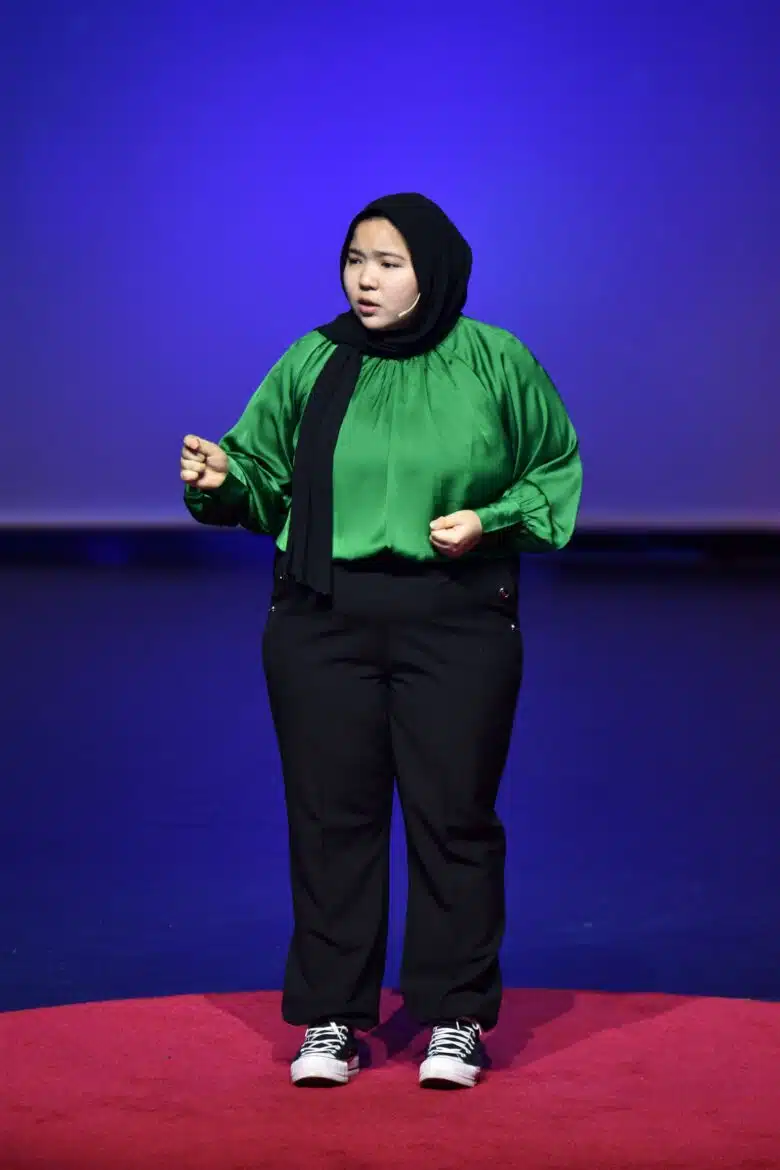
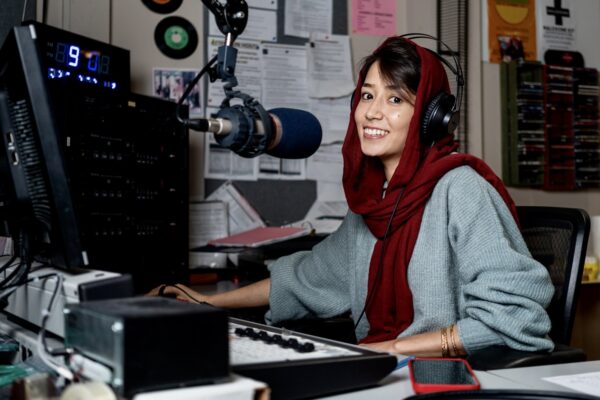
Muhaddisa’s advocacy extended beyond the classroom. She has become a powerful public speaker, using her voice to challenge misconceptions about refugees and highlight the importance of inclusion.
In her TEDx talk, “What It Takes to Be a Refugee,” she spoke about resilience, displacement, and the humanity behind the label “refugee.”
“Refugees are not a monolithic identity,” she explains. “We are individuals with dreams, skills, and the ability to contribute meaningfully when given the chance.”
She has since spoken at national and international forums, representing refugee and Afghan women’s perspectives and calling attention to the systemic barriers that continue to deny millions access to education and safety.
Parastoo: Building bridges for newcomers
Despite her growing recognition, Muhaddisa remains deeply rooted in community work. Alongside her brother, she co-founded Parastoo, an organization dedicated to supporting newcomers and refugees as they navigate life in Canada.
Parastoo was born from lived experience. Muhaddisa and her brother understood firsthand how overwhelming resettlement can be — from navigating unfamiliar systems to finding a sense of belonging in a new country.
“Parastoo is our way of giving back,” she says. “We want newcomers to feel supported, informed, and empowered from the moment they arrive.”
Through advocacy, mentorship, and community engagement, Parastoo aims to bridge gaps between refugees and the services, institutions, and opportunities that can help them thrive.
Muhaddisa’s story challenges the narrow narratives often associated with refugees. She is not defined by what she lost, but by what she continues to build. She is a student, a leader, an advocate, and a future lawyer determined to shape fairer systems for those who come after her. Her journey illustrates the immense potential unlocked when refugees are given access to safety, education, and opportunity.
“We are not just refugees,” she says. “We are future leaders, educators, lawyers, and change-makers.”
Looking ahead
As Muhaddisa looks toward the future, her goals remain deeply connected to her past. She hopes to pursue a career in law, focusing on human rights and refugee protection, so that others will not have to fight the same battles she once did.
Her journey — from a displaced Hazara child denied education, to a scholar and advocate in Canada — is a testament to the power of resilience and the importance of inclusive systems.
It is also a reminder that when refugees are protected and empowered, entire societies are strengthened.
“Every child deserves safety, education, and the freedom to dream,” Muhaddisa says. “When we protect those rights, we build a better future for everyone.”