


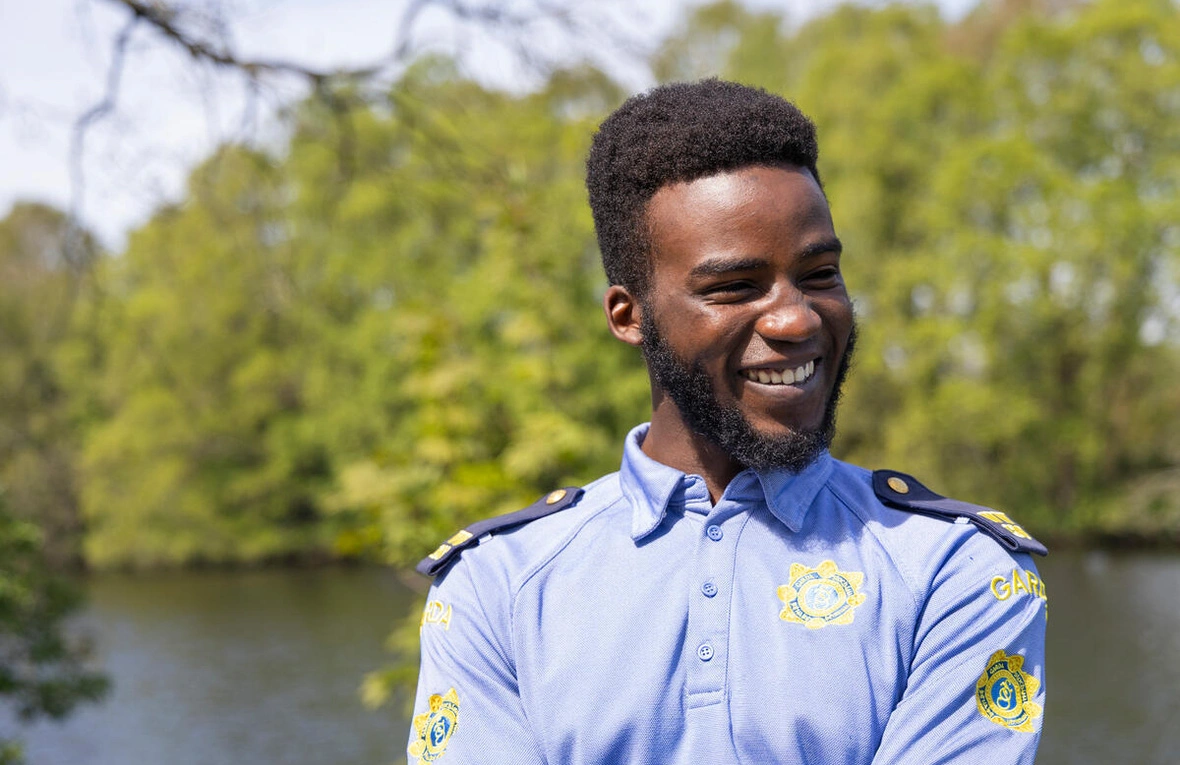
Emmanuel Tacima Samuel, a refugee from South Sudan resettled to Ireland as a teenager, is now a community Garda.
© UNHCR/Aoife Harte
GENEVA – An urgent expansion of refugee resettlement is needed as new projections highlight a continued gap between global needs and available places, according to the latest Projected Global Resettlement Needs report by UNHCR, the UN Refugee Agency.
UNHCR forecasts that some 2.4 million refugees around the world will require resettlement in 2027, as they still face protection risks in their country of asylum and are unable to safely return home. While this figure represents a 6 per cent decline compared to 2026 and continues a downward trend since 2025, the reduction reflects specific developments in certain contexts – some promising, others challenging.
In Syria, the change of government in December 2024 has opened the way for voluntary return despite ongoing fragility, reducing projected needs for some. In contrast, the lower predicted resettlement needs for Afghan refugees in Iran and Pakistan are linked to returns under adverse circumstances.
Afghans remain the largest group in need of resettlement, followed by refugees from South Sudan, Sudan, Syria and Rohingya refugees, who are mostly in Bangladesh and continue to face acute risks and limited alternatives. Regionally, resettlement needs remain highest in Eastern and Southern Africa, followed by Asia and the Pacific, and West and Central Africa.
In 2025, approximately 37,000 refugees departed to a new country through UNHCR-assisted resettlement globally, down significantly from more than 116,000 in 2024 and only a fraction of those in need.
In 2022, the international community set a target of 130,000 resettlement places for 2027, but declining quotas mean that this goal is unlikely to be met. This reflects a combination of policy changes in destination countries that have led to pauses in admissions, more restrictive criteria and processing backlogs.
Many of the countries that host the largest numbers of refugees call for expanded resettlement as a form of international responsibility-sharing. Low- and middle-income countries host 68 per cent of refugees, and while most continue to show generosity, they also face strain on their local resources and systems.
Resettlement, which was the first solution that the international community implemented after the Second World War, is a key pillar of UN High Commissioner for Refugees Barham Salih’s drive to halve the number of refugees in protracted displacement reliant on humanitarian assistance by 2035. As we mark the 75th anniversary of the 1951 Refugee Convention this year, recommitting to protection and solutions is more critical than ever.
Resettlement helps relieve pressure on host countries, strengthens partnerships, contributes to stability, and helps reduce dangerous onward journeys. Expanding resettlement is urgent and achievable. Increasing quotas, bringing more countries on board, and accelerating processing would ensure that this life-saving tool reaches more of those most in need.
Resettlement is not charity, but an enduring solution that helps break the displacement cycle for future generations. Resettled refugees contribute to their new communities through work and entrepreneurship, while also supporting families in their countries of origin or asylum.
UNHCR thanks resettlement countries that continue to lead by example. Every place rebuilds a life.
For more information, please contact:
- In Geneva: Carlotta Wolf, wolf@unhcr.org, +41 79 546 67 07