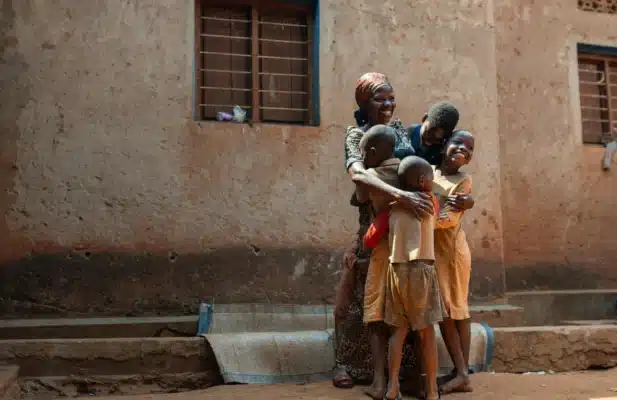


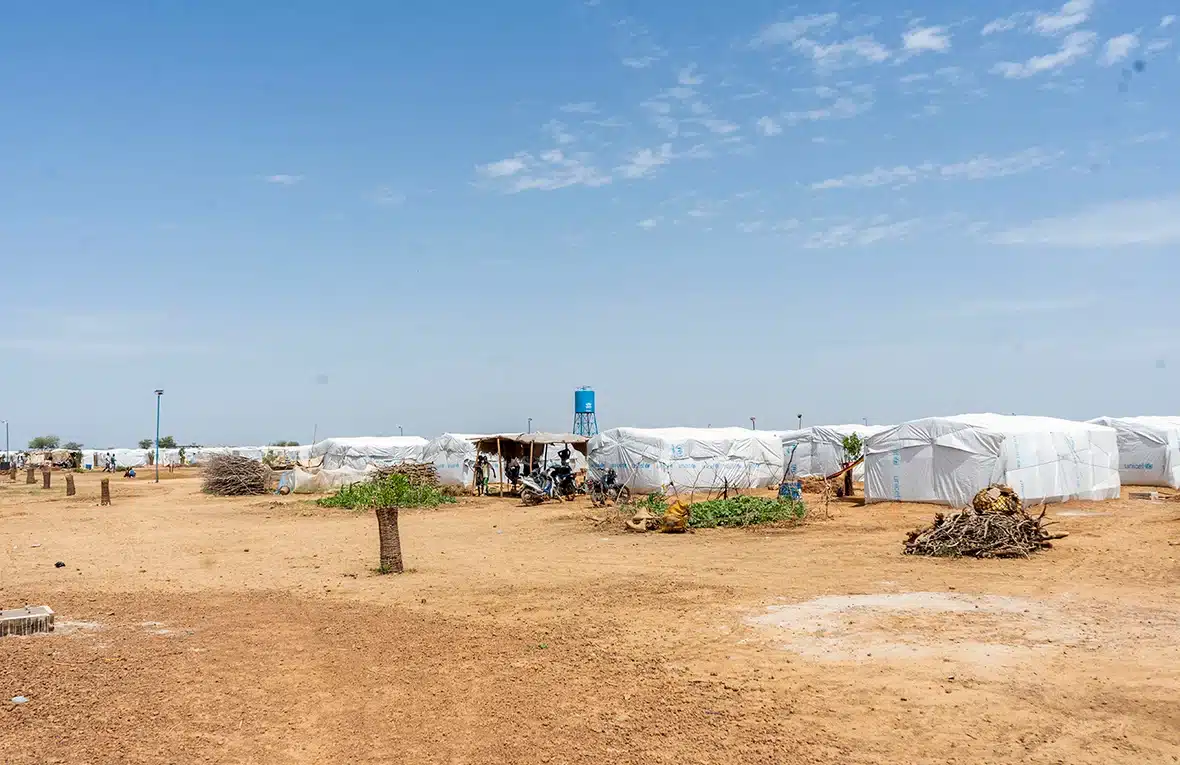
A refugee settlement in the Koro area of Mali, which is currently home to some 86,000 refugees from Burkina Faso.
©UNHCR/Mohamed Aguissa
This is a summary of what was said by Abdouraouf Gnon-Konde, UNHCR’s Director of the Regional Bureau for West and Central Africa – to whom quoted text may be attributed – at the press briefing at the Palais des Nations in Geneva.
GENEVA – UNHCR, the UN Refugee Agency, is increasingly concerned about the deepening displacement crisis in the Central Sahel, with nearly 4 million people uprooted across Burkina Faso, Mali and Niger, including more than 818,000 refugees and asylum-seekers. This is roughly twice the number recorded in October 2020, when the region had more than 1.7 million internally displaced people and 365,000 refugees.
The crisis is being compounded by continued attacks affecting civilians, climate-related shocks and severe humanitarian funding shortfalls. Together, these pressures are forcing more families to flee, eroding livelihoods and limiting opportunities for displaced people to rebuild their lives, contributing to further movements within and beyond the region.
In Mali, the vast majority of refugees are from neighbouring Burkina Faso. In Koro, in the Bandiagara region, some 86,000 Burkinabè refugees had sought safety as of July 2026, following successive waves of displacement since 2025. Among them are more than 14,000 children and 6,000 women identified as being at particular risk. The refugee population is now approaching the size of the local host community, placing mounting pressure on already scarce land and water resources, overstretched health services and limited livelihood opportunities.
Climate-related shocks are adding another layer of pressure to communities already struggling with displacement and insecurity. Recurrent droughts, erratic rainfall and flooding are disrupting agricultural production, damaging homes and infrastructure, and reducing access to water and livelihoods. For families who depend heavily on farming and livestock, these shocks are further undermining their ability to support themselves.
While longer-term political solutions are pursued, much greater support is needed now for refugees, internally displaced people and the communities hosting them. More resources are urgently needed to protect those most at risk, sustain access to basic services, including education, and expand livelihood opportunities, in line with UNHCR’s 50 by 35 vision, which aims to advance self-reliance and lasting solutions for refugees in protracted displacement by 2035.
In Koro, agricultural cooperative initiatives bringing together Burkinabè refugees and host-community members have helped expand cultivated land from 21 hectares in 2025 to 45 hectares in 2026, improving food production and household incomes. In Burkina Faso, similar support in Kaya is helping internally displaced people and host communities increase food production, reduce post-harvest losses and generate income.
These efforts remain tiny compared with the scale of displacement, but they show what can be achieved when people forced to flee are given the means to rebuild their lives while longer-term solutions are sought.
Scaling up these initiatives will require sustained investment to strengthen national systems, expand livelihood opportunities and support displaced people and the communities hosting them.
The crisis is also increasingly extending beyond the Central Sahel. In 2026, almost 500,000 Burkinabè refugees and asylum-seekers had sought safety in neighbouring countries, up from over 300,000 at the end of 2025. Many have fled to West Africa’s coastal countries, including Benin, Côte d’Ivoire, Ghana and Togo. More than 334,000 Malians are also refugees abroad, while over 106,000 Nigeriens are recorded as refugees and asylum-seekers in neighbouring countries.
For some, displacement does not end in neighbouring countries. When safety and prospects remain out of reach, refugees may move on, often alongside migrants, taking dangerous routes towards North Africa and Europe. This underscores the wider regional and international consequences of prolonged insecurity and limited opportunities closer to home.
To strengthen protection and solutions for refugees and migrants wherever they are along key routes across the region, UNHCR has been working with governments and partners to establish multi-purpose service hubs that provide critical information, counselling, referral services and essential assistance.
At the same time, severe funding shortfalls are weakening the humanitarian response just as needs continue to grow. As of September 2026, UNHCR’s response in the Sahel was only 27 per cent funded, against the $329.6 million require, forcing difficult choices over which essential services and activities can be sustained.
Funding constraints are affecting critical protection and assistance, including registration and documentation, shelter, access to basic services and support for livelihoods. The consequences extend beyond immediate humanitarian needs. Without adequate assistance and opportunities to become self-reliant, refugees and internally displaced people face growing difficulties rebuilding their lives, while host communities are left with fewer resources to support increasing populations.
With nearly 4 million people displaced, this is the moment to scale up, not step back. Governments, development partners, international financial institutions and the private sector must invest now in protection, services, livelihoods and host communities, while sustained political engagement addresses the insecurity driving displacement.
Related links
For more information, please contact:
- In Dakar (regional), Senan Rose Fidelia Bohissou: bohissou@unhcr.org, +221 77 569 91 60
- In Geneva, Eujin Byun: byun@unhcr.org, +41 79 747 8719