


Statistics on Asylum-Seekers in Canada
Last updated: May 2026
Photo: © UNHCR/Soo-Jung Kim
Asylum-seekers are individuals who have fled their country due to fear of persecution on the grounds of their race, religion, nationality, political opinion, or membership in a particular social group and whose request for protection by the host country has yet to be processed.
Canada has been a signatory to the 1951 Convention on the Status of Refugees since 1969 and respects the individual right to claim asylum. The government has set up a system so individuals can have their asylum applications assessed and determined by an independent tribunal known as the Immigration and Refugee Board (IRB).
Seeking asylum is a fundamental human right enshrined in the 1948 Universal Declaration of Human Rights and then again in the 1951 Refugee Convention and its 1967 Protocol.
Facts and Figures | 2025
Overall asylum-seekers in Canada
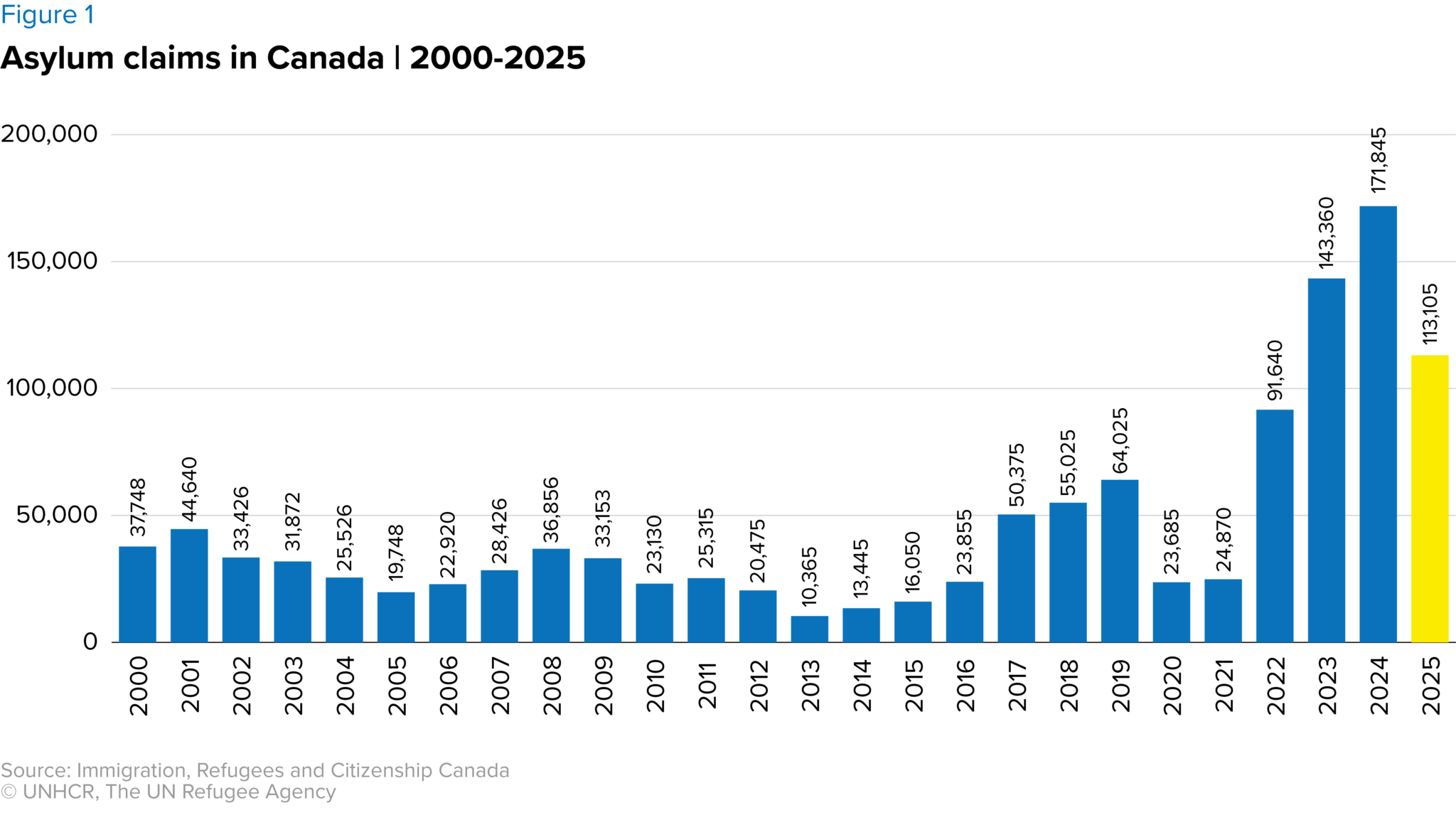
Canada received 34% fewer asylum claims in 2025 than in 2024, a decrease of just over one-third.
Asylum claims in Canada in 2025
In light of unprecedented global displacement, these figures reflect only a portion of worldwide migration. By the end of June 2025, an estimated 117.3 million people had been forcibly displaced from their homes due to persecution, conflict, violence, human rights violations, and events seriously disturbing public order. Approximately 71 per cent of the world’s refugees are hosted in low- and middle-income countries.
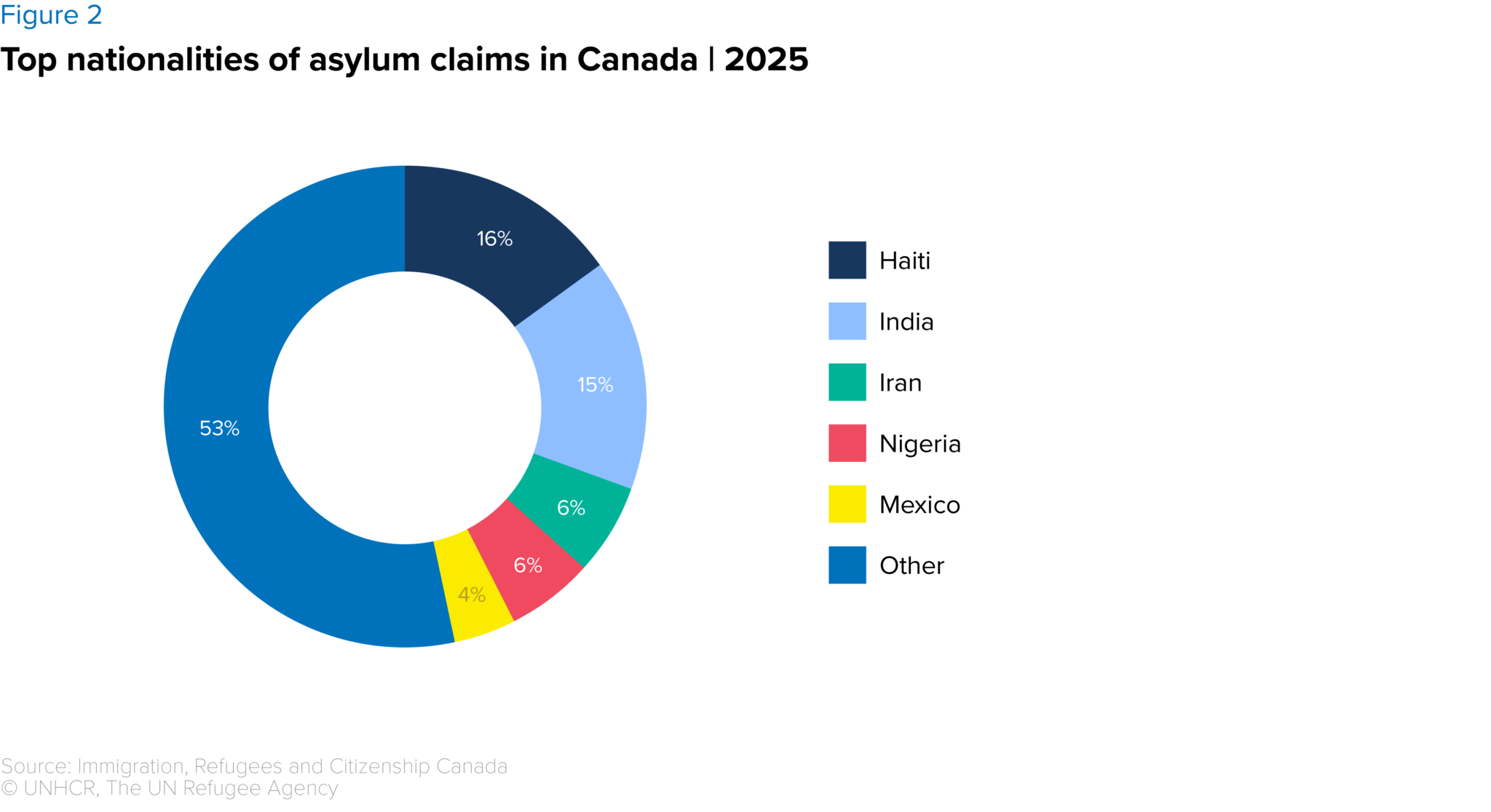
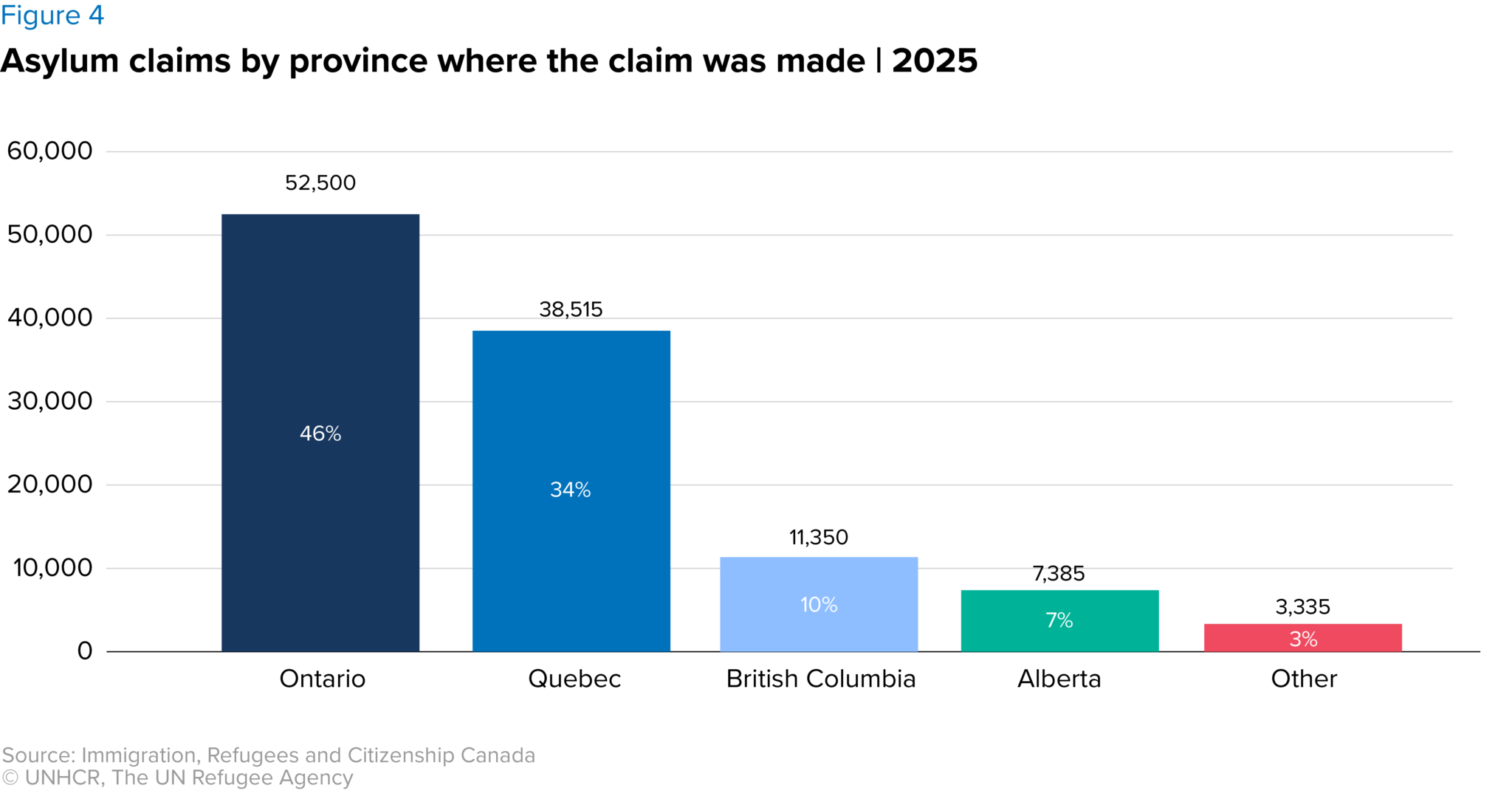
Distribution of asylum claims in Canada by office type and province
To apply for asylum, you must be physically present in Canada or be seeking entry into the country at a point of entry (airport, land border, or seaport).
Persons who make an asylum claim at the Canadian land border are subject to the Safe Third Country Agreement (STCA). The STCA is an agreement between Canada and the U.S. which requires asylum-seekers to make their claim in the initial country they arrive in, be it Canada or the U.S. Consequently, persons arriving at a Canadian land border to seek asylum are sent back to the U.S., unless they fall under specific exceptions to the Agreement, such as having qualifying family members in Canada.
Canada’s asylum claims began to decline after June 2024 and continued into 2025, largely due to a sharp drop in airport-based claims following the introduction of more selective visa policies.
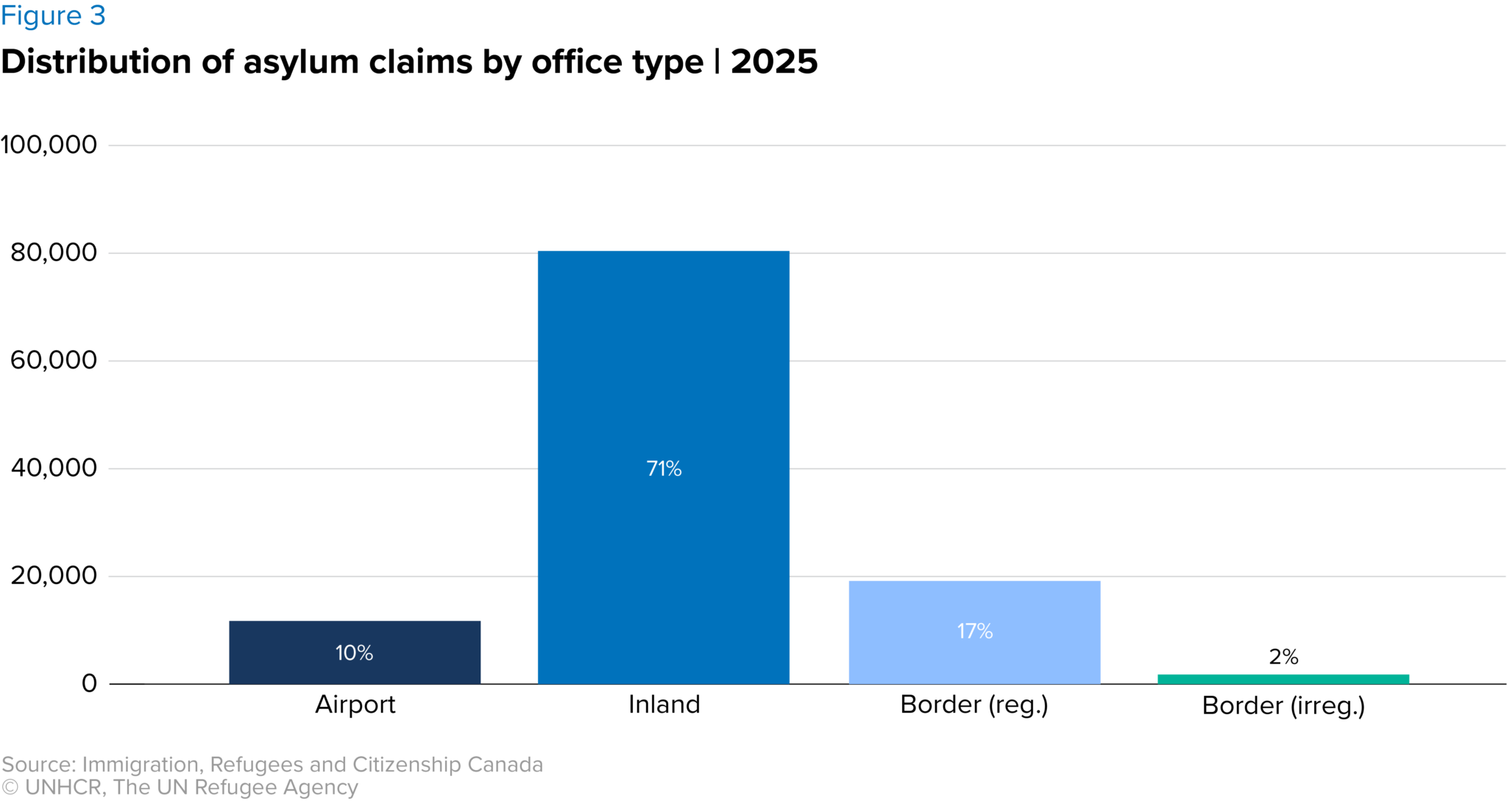
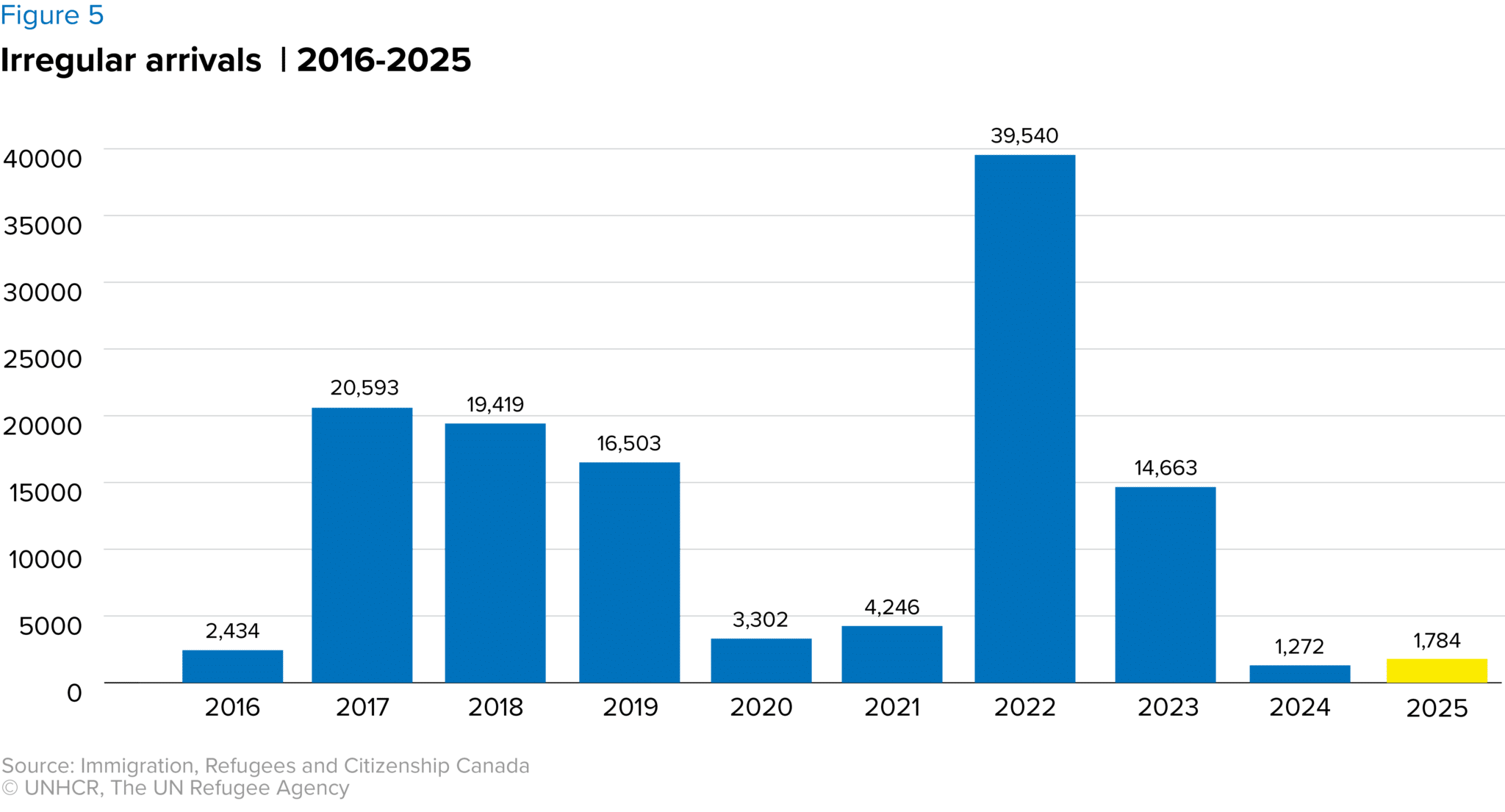
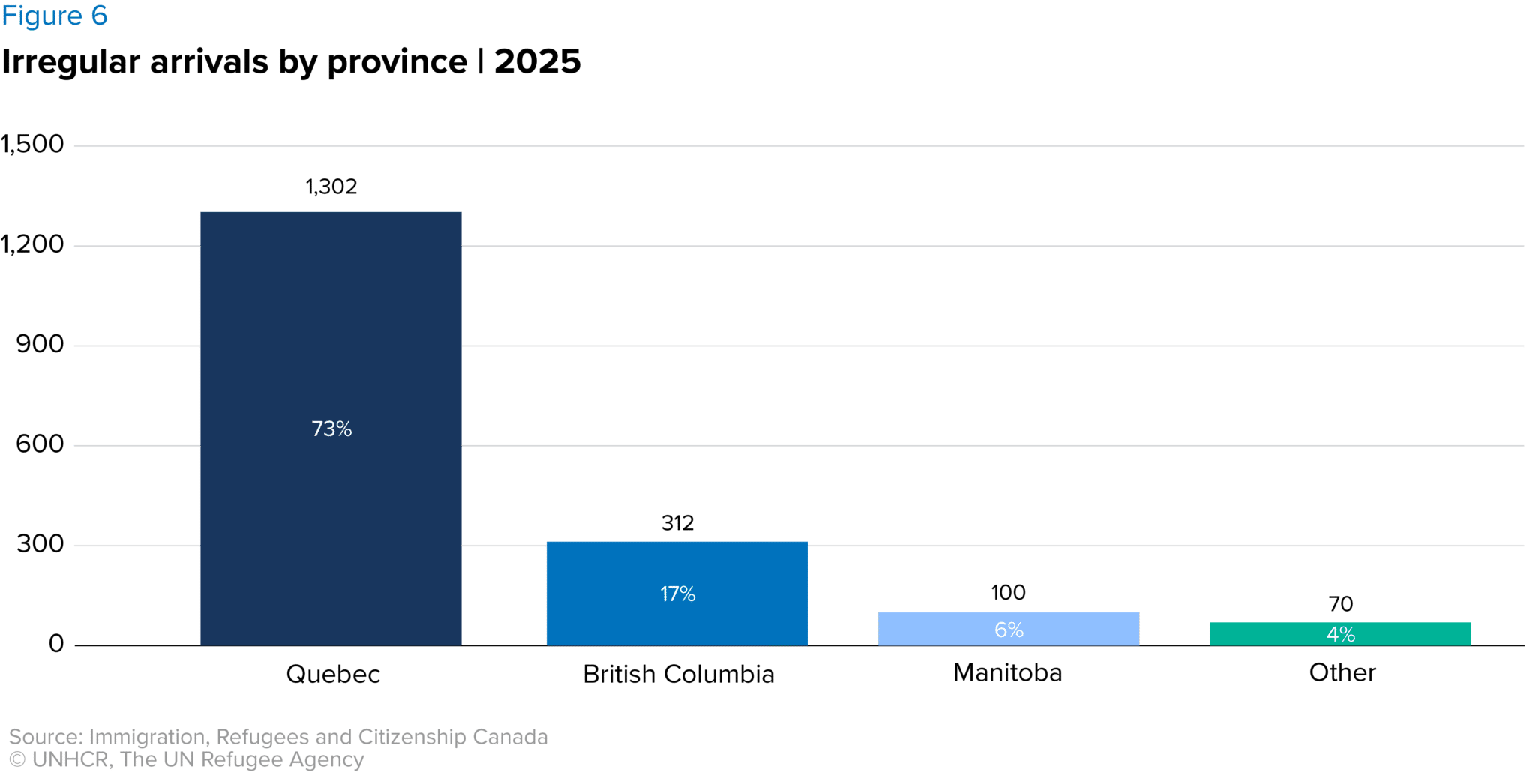
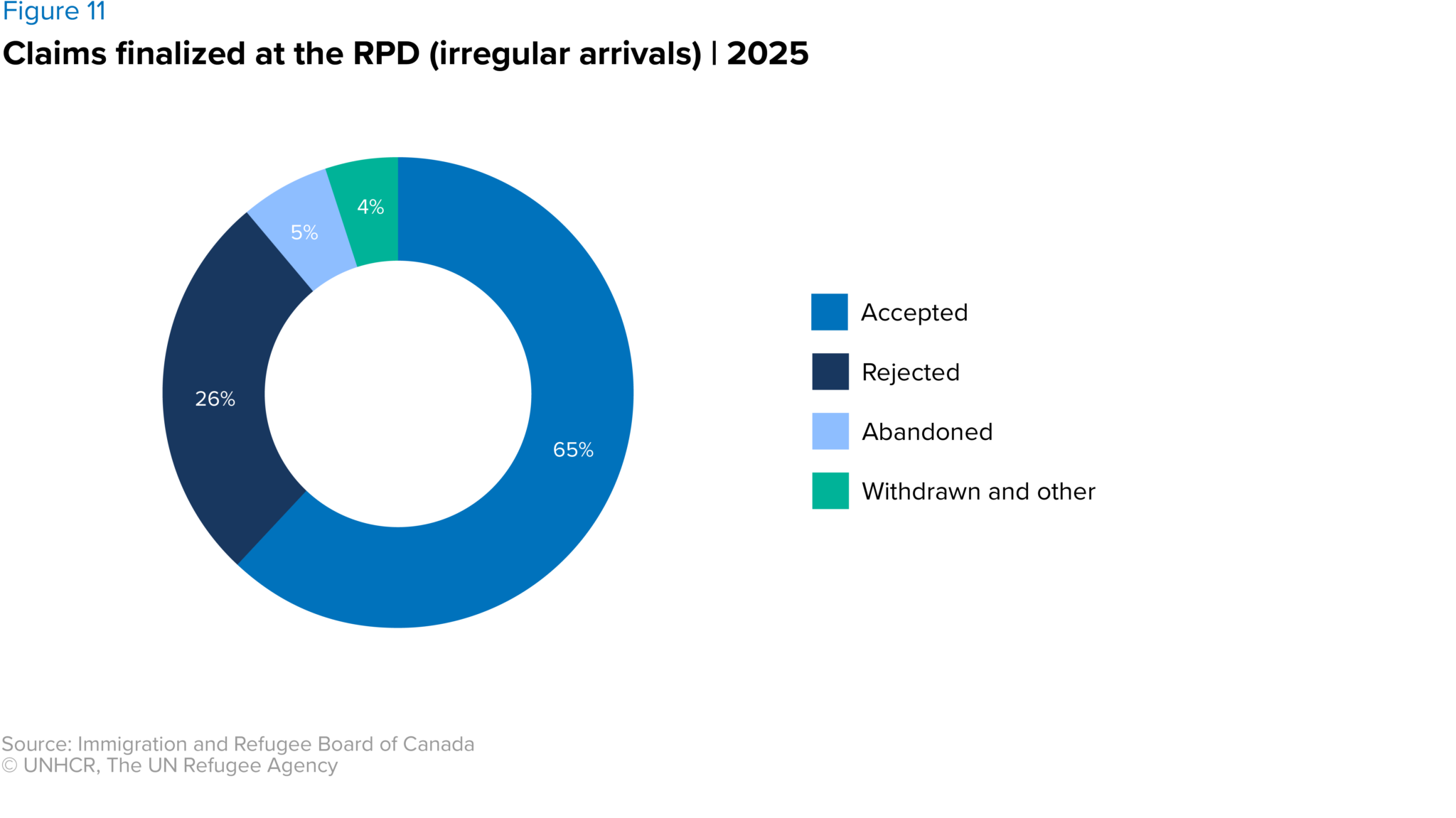
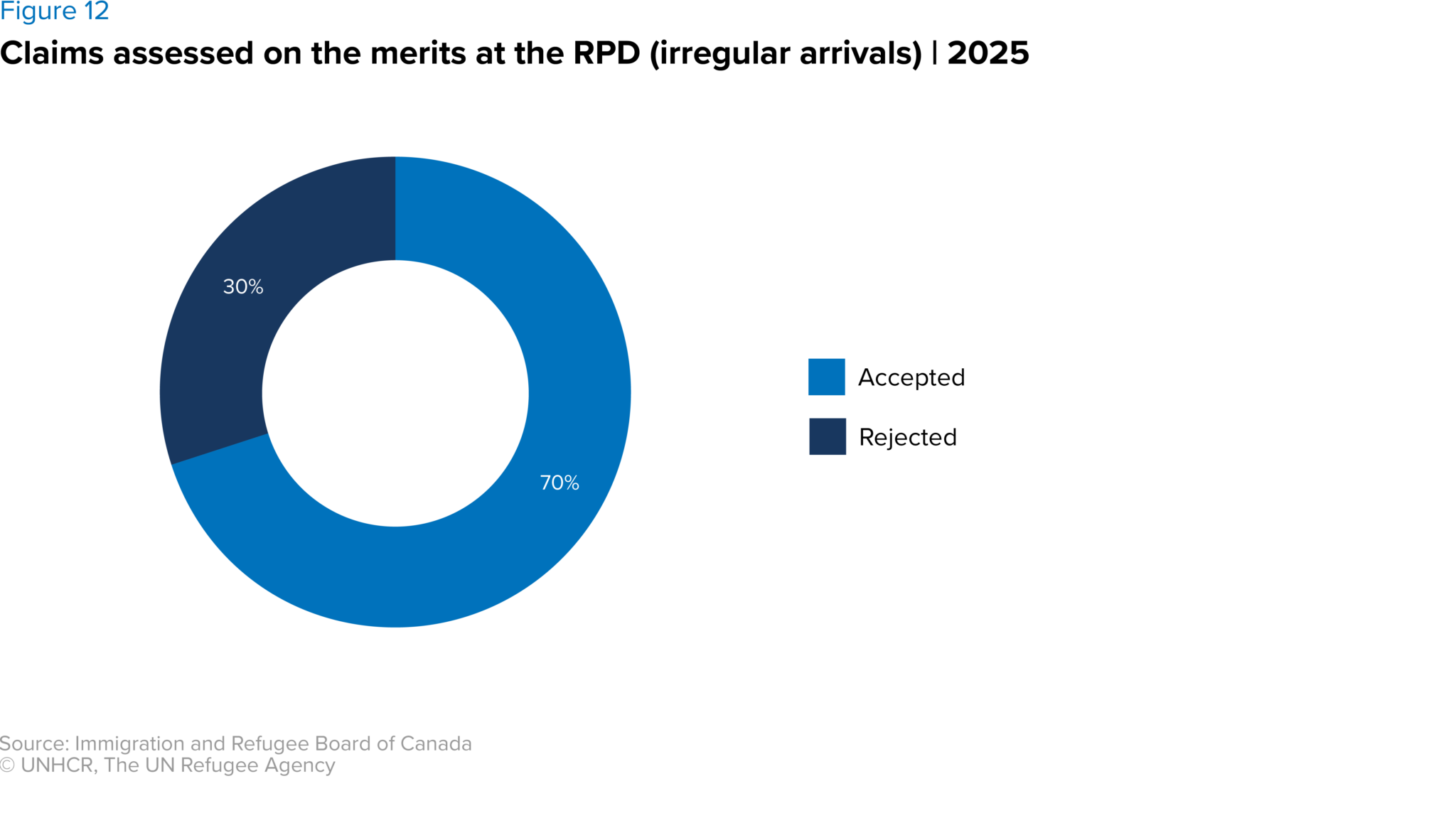
The term “irregular arrivals” in the below graphics refers to asylum-seekers apprehended by the Royal Canadian Mounted Police (RCMP) between official ports of entry. This data does not include individuals who may have crossed irregularly without being intercepted and later made an asylum claim inland. As such, it may not fully reflect the total number of irregular entries into Canada.
Irregular or illegal? Under international law, crossing a border irregularly between official ports of entry is not illegal if done to claim asylum. The right to seek asylum is a human right and remains protected irrespective of the method or mode of entry into a country.
Refugee status determination at the Immigration Refugee Board
The first step of the asylum process is the eligibility interview. After claiming asylum, government officials will verify the asylum-seeker’s identity, perform a security screening and conduct an interview to determine if the person is eligible to go on the second step of the asylum process. If so, the person’s asylum claim will be referred to the Immigration and Refugee Board of Canada (IRB).
The IRB is Canada’s largest independent administrative tribunal responsible for making well-reasoned decisions on immigration and refugee matters in accordance with the law. The Refugee Protection Division (RPD) of the IRB reviews asylum applications to determine whether the applicants have a well-founded fear of persecution if returned to their country of origin, in line with international and Canadian law. The merit of each claim is assessed on an individual basis during a hearing, based on the evidence and arguments presented.
If an asylum-seeker’s claim is accepted, the person obtains refugee/protected status, can stay in Canada, and eventually apply to become a permanent resident. If the claim is rejected and all legal recourses have been exhausted, the person will have to leave the country.
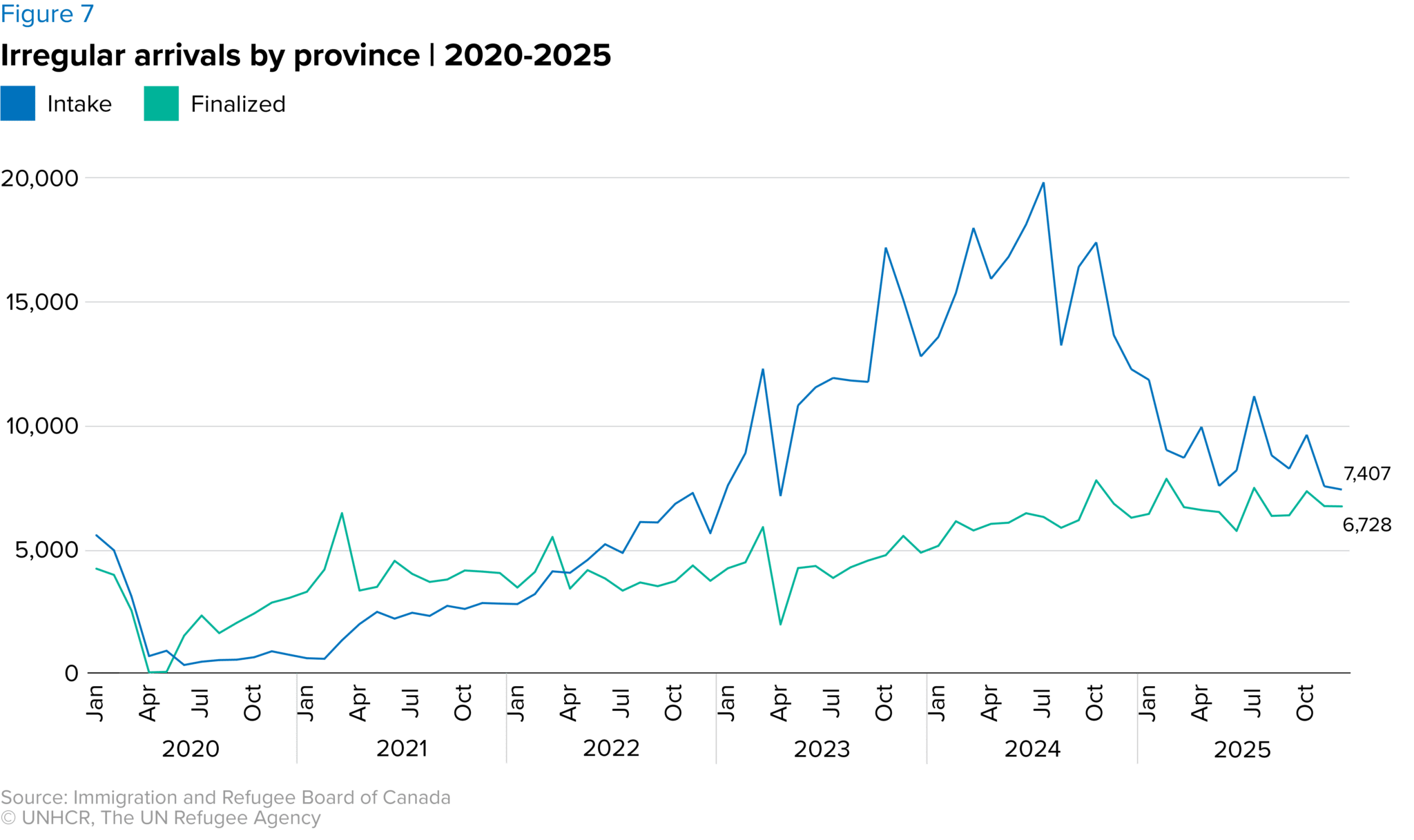
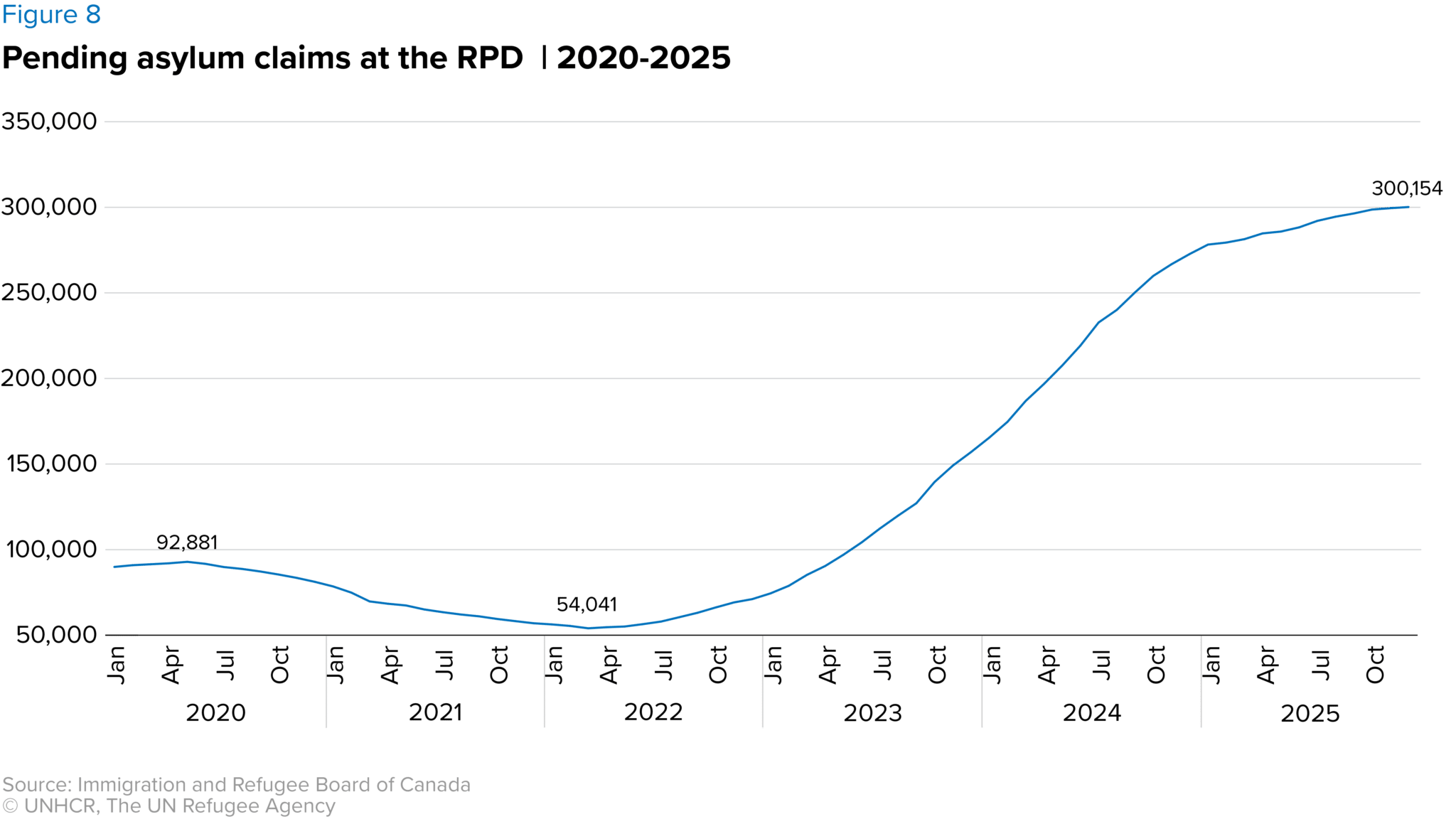
It can take a few years between the time a person makes an asylum claim and the time the claim is assessed by the RPD. The statistics below refer only to claimants who have reached the IRB stage of the asylum process.
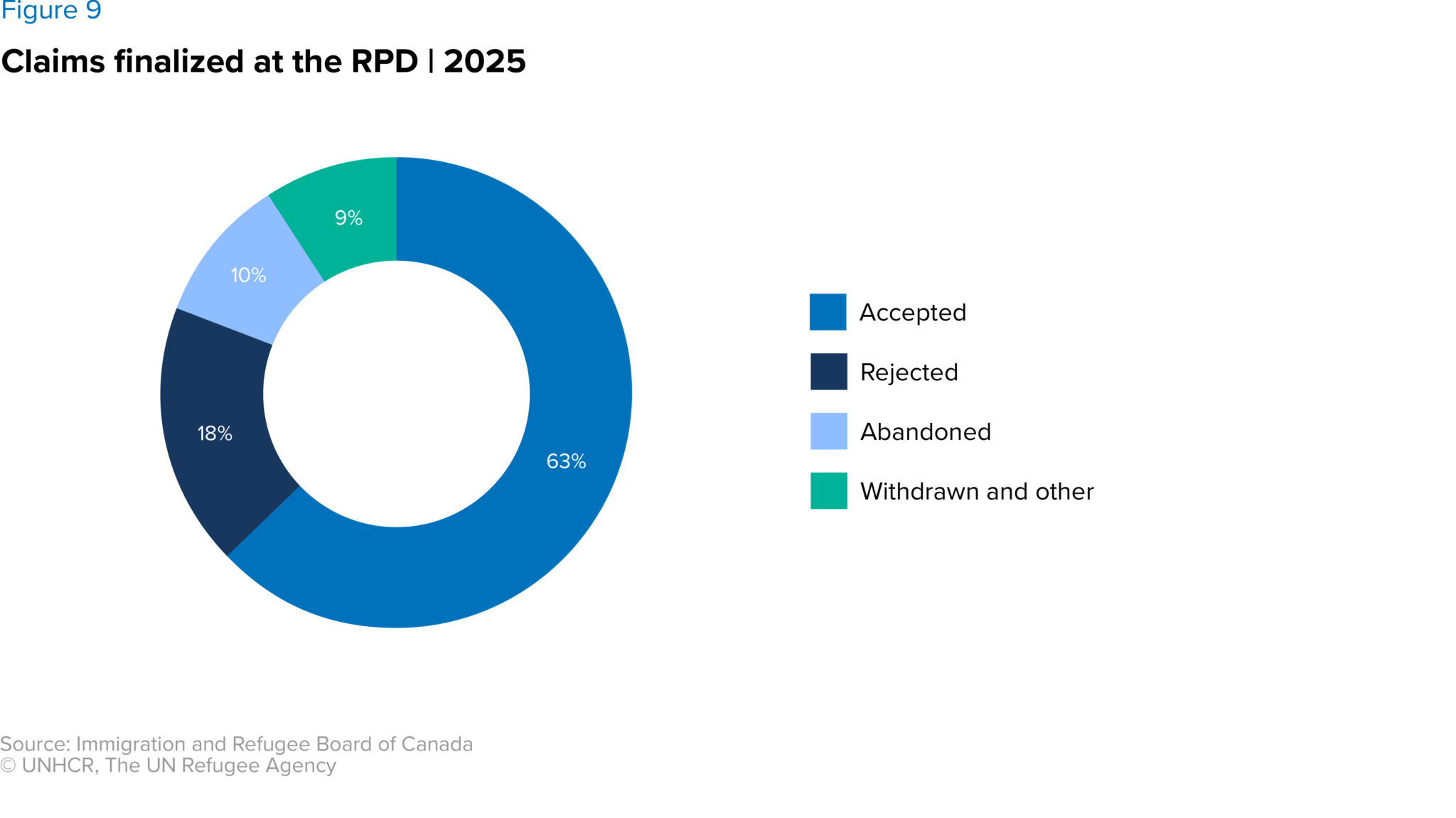
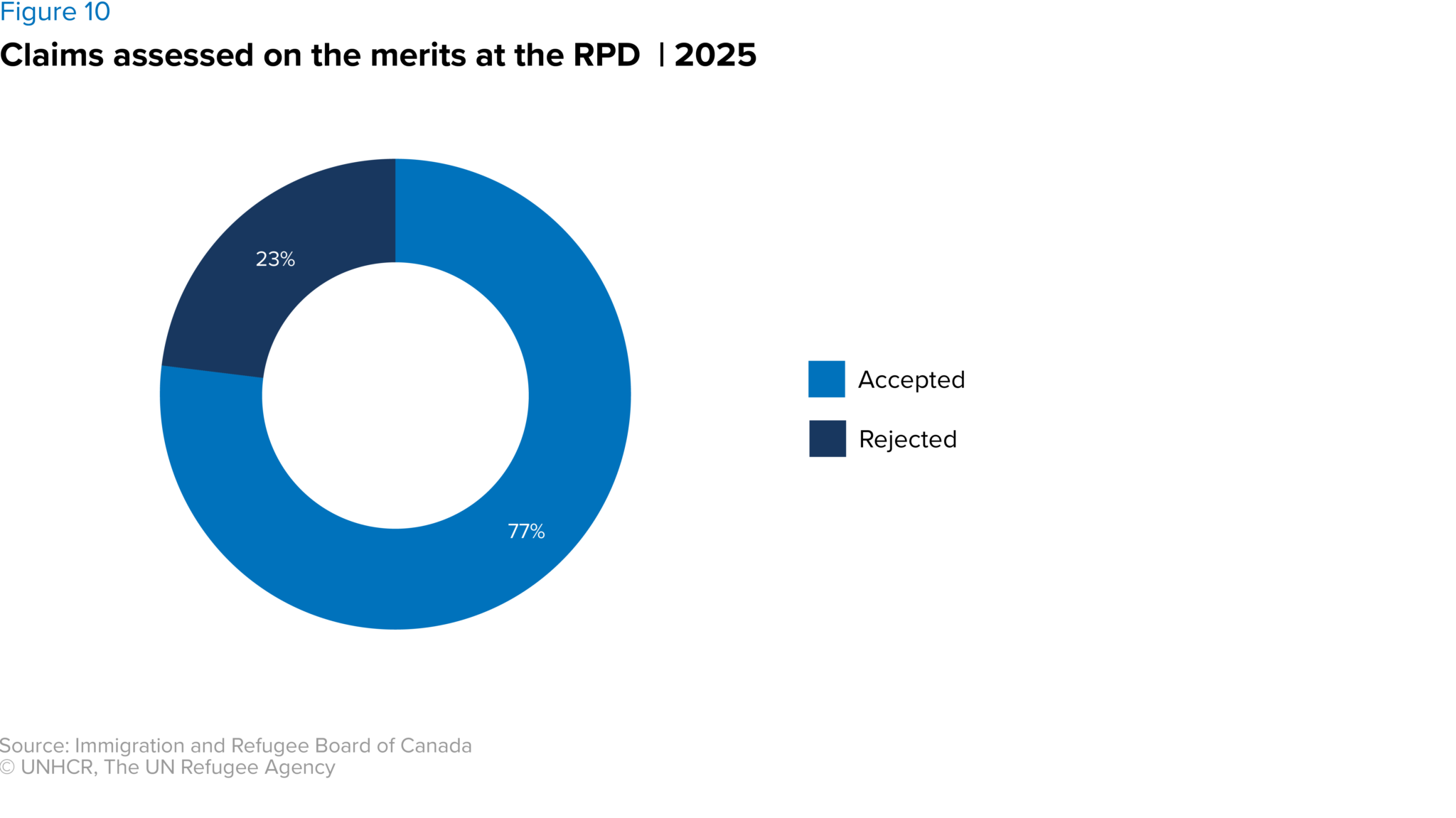
The two graphs below include different data sets. Figures 9 and 11 show acceptance rates based on the total number of claims that were processed and finalized, including claims that were closed following a withdrawal or an abandonment. Withdrawn and abandoned cases are not evaluated on the merits of the asylum claim. Figures 10 and 12 show the acceptance rate only for cases that were evaluated on the merits of their asylum claim, based on the evidence and arguments presented.
All data are sourced from publicly available Canadian government sources, including: